In formal settings, i.e. schools and universities, “learning” is sometimes reduced to creating a product (assessment, evaluation) as “evidence” that instruction has been “effective”.
This is problematic for many reasons: if we only measure the end result, we have no idea where students started, maybe they already knew about the topic? We all learn every day on our own. It is impossible to be a human and NOT learn. If students already knew what was taught, can we still credit this “learning” to the effectiveness of instruction?
Learning really is a process, not a product!
The very interesting questions are: What does the individual learning process look like? And how can we support that iterative learning process? How should I teach? Here are important facts to consider:
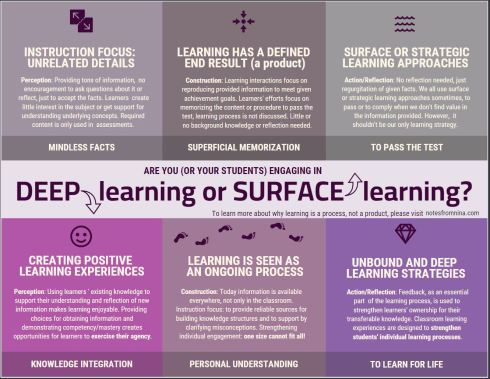
Focusing on supporting the individual learning process is not the easiest way to teach because every student arrives to the classroom (or training session) with diverse set of skills, knowledge, experiences and expectations. Their equally different take-away is what we educators call “learning”. It is important for anyone in education and training industry to remember that (thank goodness!!) students learn even in spite of us.
These learning process blog posts are the most popular:
Is learning a product or process?
Is learning a product or process – part 2
Teachers’ Pedagogical Knowledge – TPK
Instruction supporting learning process
My other site NinasNotes.fi has a bit more scholarly posts about learning and learner agency and Choosing How to Teach features SEL articles and images.
I hope you enjoy!
🙂
Nina

 NotesFromNina