3 Core Concepts of Meaningful Learning

15 Sep

Meaningful learning is contextual and situational, and it greatly helps students to be more interested and more successful in their studies. The concept of meaningful learning is not new: already in 1978 researchers empahsized how important it is for students to engage in active learning and purposefully construct their own knowledge and understanding[1].  Meaningfulness of learning content and instructional delivery support students’ motivation and engagement.

Contemporary educational research recognizes the importance of students’ intrinsic motivation and self-concepts as means for improving their academic performance[2].  The first premise for any deep learning to occur is to introduce the new information in a way that makes students interested in acquiring it (buy-in from students’ part improves the effect teaching has).

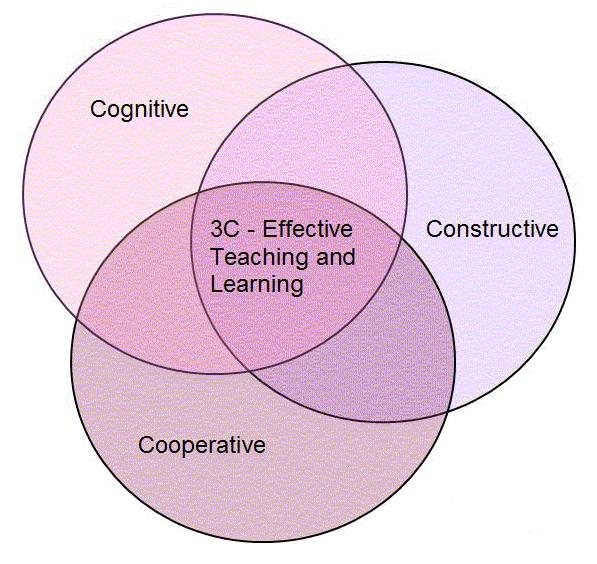
The three core concepts that help making learning more meaningful are:

Cognitive approach – to create the foundation, because students’ thinking needs to change, not just their behaviour.

Constructive tools  – to focus on supporting students’ learning process and create the real-life connections

Cooperative tools  – to guide the classroom management decision and help students engage int heir learning goals

Learning new things in a way that makes them useful in the future, and also seeing that connection while learning occurs, makes acquiring new information more interesting.  When new information is added to our existing knowledge it needs to have as many connections as possible to ensure fast and easy retrieval from memory.

The more retrieval paths we create and use while learning, the deeper the new knowledge becomes (this is one part explaining why multilingual students can learn more easily), and the more confidence we have about our own learning competence.  It is really hard to find something that forces us to struggle  every day to be meaningful and interesting to do.

As teaching and learning are two very different phenomena that occur in the same physical space, I want to discuss the 3Cs first from the students’ point of view and then form the teachers’ point of view.

The Three Cs for Students

Cognitive learning (developing knowledge) means that the student is an active participant in the learning process, and focuses on understanding concepts, not just remembering facts. Cognitive learning is also is about using reasoning skills and finding logical solutions for problems, as well as about the student knowing how s/he learns, and being confident that s/he has an effect on how her/his learning happens (self-efficacy).

Constructive learning (integrating knowledge) is about building on previous experiences and using time spent in the classroom in a productive manner, so that students don’t engage with busywork, but get to learn on their own level (regardless being above of below the standards).  Constructive learning is not shallow or superficial, but creates meaningful experiences that help students become successful in life.

Cooperative learning (externalizing knowledge) makes learning a pleasant journey shared with friends. It is about getting and giving help, and being collaborative instead of competitive. Classroom organization and behavior management also fall under the label of cooperative learning, because it is important to accommodate everyone’s needs equally. This builds an emotionally safe learning environment where everyone feels accepted. In such environments, students won’t hesitate to ask for help from the teacher or from each other if they don’t understand something.


The Three Cs for Teachers

Cognitive teaching means catering to students’ intellectual needs and providing opportunities for students to process what they have learned.  We must increase our understanding of individual learning and make opportunities for students to negotiate meanings (i.e. have them get answers to a common question: “what’s in it for me?”). It is also important to teach different learning strategies (e.g. concept mapping, other graphic organizers, ways to chunk details, how to practice recalling, etc.)  to help students engage in active learning.  Learning motivation carries the baggage of beliefs about personal learning competence and also the family’s beliefs about being able to learn. These are often called to “causal attributions”, the most common of which is the theory of learned helplessness, the belief that individuals have no control over events that have an effect on them.

Constructive teaching means handing the tools of learning over to the student. In the classroom, this is visible in the form of students being provided with choices. Having choices strengthens students’ executive functions, as they are able to plan for their actions and carry out their plans with the teacher’s support. Constructive teaching focuses more on experiential and  problem based learning and engaging students in the complete learning cycle (Kolb) than just delivering a bunch of facts [3]. When used in conjunction, constructive and cognitive teaching emphasize the process of learning and guide the individual learning process.

Cooperative teaching means that the teacher doesn’t want to use unnecessary power over students, but strives to create a solid structure in the classroom so that everybody knows what to do and how to behave. Rules should be created in cooperation with students, because following rules that you have helped create is much easier than following externally imposed rules. Cooperative teaching also means that students are held accountable for their own learning, and the teacher is there to help students achieve their individual learning goals.

Makes sense, anyone?

Education changes the life of our students, so in a way it is always transformative.  In the worst case student drops out of the educational system believing that s/he is a failure, that s/he cannot learn. Choosing to teach in a way that enhances meaningful learning helps every student towards the positive transformation. Our knowledge and beliefs are references to the life we live, so living and learning cannot be separated from each other, no matter how old or young  the students are.


[1] Ausubel, D. P., Novak, J. D. & Hanesian, H. 1978. Educational psychology a
cognitive view. 2. painos. New York: Holt, Rinehart and Winston.

[2] Green, J., Liem, G. A. D., Martin, A. J., Colmar, S., Marsh, H. W., & McInerney, D. (2012). Academic motivation, self-concept, engagement, and performance in high school: Key processes from a longitudinal perspective.Journal of adolescence35(5), 1111-1122.

Veermans, M., & Tapola, A. (2004). Primary school students’ motivational profiles in longitudinal settings. Scandinavian journal of educational research,48(4), 373-395.

[3] Kolb, D. A. (1984). Experiential learning: Experience as the source of learning and development (Vol. 1). Englewood Cliffs, NJ: Prentice-Hall


Great teachers

25 Aug

Good teachers have strong organizational skills. Good teachers have solid decision-making skills. Good teachers get important things done.

Exceptional teachers do all of the above–and more. Sure, they care about their school and students, their principals and administrators. But most importantly, they care to an exceptional degree about the people who work for them, their students.

That’s why extraordinary teachers give every student:

1. Autonomy and independence

Great organizations are built on optimizing processes and procedures. Still, every task doesn’t deserve a best practice or a micro-managed approach. Engagement and satisfaction are largely based on autonomy and independence. I care when it’s “mine.” I care when I’m in charge and feel empowered to do what’s right.

Plus, freedom breeds innovation: Even heavily product-oriented assignments have room for different approaches.

Whenever possible, give your students the autonomy and independence to work the way they work best. When you do, they almost always find ways to do their jobs better than you imagined possible.

2. Clear expectations

While every assignment should include some degree of independence, every assignment does also need basic expectations for how specific situations should be handled.

Criticize a student for writing an opinion today even though yesterday that was standard practice and you make that student’s learning impossible.  Few things are more stressful than not knowing what is expected from one day to the next.

When an exceptional teacher changes a standard or guideline, s/hes  communicates those changes first–and when that is not possible, s/he takes the time to explain why s/he made the decision s/he made, and what she expects in the future.

3. Meaningful objectives

Almost everyone is competitive; often the best students are extremely competitive–especially with themselves. Meaningful targets can create a sense of purpose and add a little meaning to even the most repetitive tasks.

Plus, goals are fun. Without a meaningful goal to shoot for, studying is just work.

No one likes work.

4. A true sense of purpose

Everyone likes to feel a part of something bigger. Everyone loves to feel that sense of teamwork and esprit de corps that turns a group of individuals into a real team.

The best courses involve making a real impact on the lives of the students you teach. Let students know what you want to achieve for your class, for your school, and even your community. And if you can, let them create a few lessons of their own.

Feeling a true purpose starts with knowing what to care about and, more importantly, why to care.

5. Opportunities to provide significant input

Engaged students have ideas; take away opportunities for them to make suggestions, or instantly disregard their ideas without consideration, and they immediately disengage.

That’s why exceptional teachers make it incredibly easy for students to offer suggestions. They ask leading questions. They probe gently. They help students feel comfortable proposing new ways to get things done. When an idea isn’t feasible, they always take the time to explain why.

Great teachers know that students who make suggestions care about their learning, so they ensure those students know their input is valued–and appreciated.

6. A real sense of connection

Every student works for a grade (otherwise they would bring you more of their work than just assignments), but every student wants to work for more than a grade: They want to study with and for people they respect and admire–and with and for people who respect and admire them.

That’s why a kind word, a quick discussion about family, an informal conversation to ask if an student needs any help–those moments are much more important than group meetings or formal evaluations.

A true sense of connection is personal. That’s why exceptional teachers show they see and appreciate the person, not just the student.

7. Reliable consistency

Most people don’t mind a teacher who is strict, demanding, and quick to offer (not always positive) feedback, as long as s/he treats every student fairly.

(Great teachers treat each student differently but they also treat every student fairly. There’s a big difference.)

Exceptional teachers know the key to showing students they are consistent and fair is communication: The more students understand why a decision was made, the less likely they are to assume unfair treatment or favoritism.

8. Private criticism

No student is perfect. Every student needs constructive feedback. Every student deserves constructive feedback. Good teachers give that feedback.  Great teachers always do it in private.

9. Public praise

Every student–even a relatively poor performer–does something well. Every student deserves appreciation. It’s easy to recognize some of your best students because they’re consistently doing awesome things.  (Maybe consistent recognition is a reason they’re your best students? Something to think about.)

You might have to work hard to find reasons to recognize a student who simply (or barely) meets standards, but that’s okay: A few words of recognition–especially public recognition–may be the nudge an average performer needs to start becoming a great performer.

10. A chance for a meaningful future.

Every course should have the potential to lead to greater things. Exceptional teachers take the time to develop students for the course they someday hope to take, even if that course is in another school.

How can you know what a student hopes to do someday? Ask.

Students will only care about your course after you first show you care about them. One of the best ways is to show that while you certainly have hopes for your school’s future, you also have hopes for your students’ futures.


Good advice, isn’t it?  Let me confess: these are not my words.

I owe this article to Jeff Haden, who published it in Inc. under the title of extraordinary bosses.  I just couldn’t pass the uncanny resemblance between being an awesome boss and being an awesome teacher. So, what I did was just to change words like boss, company, customer and employee to teacher, school and student.  With small adaptation it would fit well as a parenting advice, too. It made me think about the best places where I have worked and felt like a valued member of the team.

We have all this good knowledge about leadership (which resembles teaching much more than management does), and how to put it into practice.

Imagine how different education would look like if we treated our students like best companies treat their employees?

Or,

better yet,

if we treated students like valued customers??


Active and meaningful learning

7 Aug

Have you noticed how there are people who seem to “happen to the world” and others who have the “world happen to them”? People who are proactive and engaged, and others who are passive and alienated?

People who happen to the world are the ones who make their own choices about their lives, learning and everything.  Isn’t that how things should be?  People being active and make decisions about their future, and shaping their own thinking. How about people with the passive approach to life, people who let the world happen to them? What is their learning like?

Psychologists use the term “locus of control” to describe whether people believe that they can control the items and actions of their own lives. Intrinsic control means that I am responsible for my own life. Extrinsic control means that someone else decides for me, and I need those others to come and save me from hard situations.

But, it also means that my achievements are controlled by external factors concentrated to explanations like “It’s about luck”, “This is too hard”, and “I don’t know xyz”- the last one being super funny as there is more information at the reach of our fingertips than ever before. And after teaching for a few years you have pretty much heard them all.

My favourite one is: “S/he made me do it”. Really? Did s/he now? And how, exactly?

Why this long intro, you may ask. Well, so much of our academic success depends on what we believe about ourselves and education, and the interactions of the two.  Life and learning cannot (and shouldn’t) be separated from each other. Simply measuring up to a performance standard, or creating a product (essay, project, worksheet, etc.) asked by the teacher shouldn’t be the end result of learning. Outcomes should be seen as a new configuration of students’ own knowledge, instead of superficial external measures.

This is the real problem in education: teaching is so disconnected from learning.  In the U.S. we invest more funds in education per pupil than many other OECD countries, yet the learning results are not improving. In a way it doesn’t surprise me because the fundamental idea of education is not matching reality.  When teaching is seen as is simple as imparting or transmitting teachers’ knowledge into students, or imposing the teachers’ worldview into them, then one could easily argue how creating more standards or paying big money for additional testing is the solution for the underachievement problem.  But information sharing is not teaching!  Learning must be active and meaningful for students!

When learning is understood as students internally constructing their own knowledge and effectively using it in problem solving and to support their learning process, then learning and teaching are certainly something more than just information sharing.

Students’ academic performance derives from their  learning, right?    And students’ learning depends on their academic self-concept, which consists their motivation (intrinsic and/or extrinsic) as well as engagement,  and also their own beliefs about their competence as learners. Understanding how students create their mindsets and beliefs about intelligence is important, and the research shows how ” there is more support for an effect of academic self-concept on achievement than vice versa” .[1]

Please note that I am not talking about boosting anyone’s self-esteem. I am trying to paint a picture of  having realistic self-image as a learner and a human being. Both our knowledge and our beliefs are references to the life we live. Children (students) are no exception from this rule. This is why it is so important, both individually as well as in communities like schools,  to ask questions like:

Do we believe in fixed intelligence as static and unchanging, based on inherited qualities like gift or talent (Mindset concept by Carol Dweck)?

Or,  do we view intelligence with a growth mindset, which understands the developing nature of it, and emphasized how everyone can learn?

Researchers strongly recommend the latter one:  “Encouraging a malleable (growth) mindset helps to sustain children’s intrinsic motivation, thereby enhancing both academic success and life-long learning”[2].  I think it is also very clear that only by empowering students to be active participants in their own learning and providing choices, we can create the culture of being responsible of our own lives and learning.

So, what can we all as adults – parents and teachers – do to foster this academic competence in every student?


N3C


[1] Bossaert, G., Doumen, S., Buyse, E. &  Verschueren, K. (2011). Predicting children’s academic achievement after the transition to first grade: A two-year longitudinal study.  Journal of Applied Developmental Psychology. 32, 47-57.

[2] Haimovitz, K., Wormington, S. V., & Corpus, J. H. (2011). Dangerous mindsets: How beliefs about intelligence predict motivational change. Learning and Individual Differences21(6), 747-75


Quality of learning, process vs. product

19 Jul

There are processes without defined products, play being probably the best example of it. Art and music don’t have a clear definitions of quality either, but we do recognize a masterpiece when we experience it. Learning works the same way. Each student has a unique learning experience, due to their diverse abilities and expectations, so the end result of learning must be open-ended, too. When students are forced into one definite learning outcome, i.e. product (think of 27 nearly identical pieces of “art work” on the classroom wall, copies of a model/template, provided by the teacher), something important of the learning quality is lost.

We already know how important play is for learning, as numerous studies show the positive effects of engaging in free play. One important part must be how play employs our creativity and curiosity. While guided play is sometimes important for concept development, it is necessary for anyone working with early childhood age students to be able to follow the child’s lead and verbally add new dimensions or elements to the play. Sitting the child down to perform a task an adult has planned has less effective learning components than enhancing the free play. Just because we will never create the same competence while  following the thinking of someone else, as we do while thinking  things through on  our own. Playing is the visual part of children’s thinking!  Helping students to engage with their own thoughts is a huge accomplishment.

There is also evidence about how social-emotional choices made during free play, like negotiating about taking turns, actually strengthen the same processes we need in scientific problem solving.  This makes me think how important it is to share our knowledge of learning and how it actually happens with students, so that they can be empowered to engage with their own learning process. Meaningfulness defines the quality of the play, as there is not an objective criteria for children how to conduct “good play”.  This is equally true with learning process, too, where meaningfulness perceived by the students drives their curiosity and engagement in class.

Measuring quality in education is hard, partly because there is not one universal definition what good quality learning looks like. People have different connotations about educational quality, and the cultural perceptions are also very diverse.  Learning, like play, is individual and very situational and contextual.

One way of approaching educational quality[1] is to see it as perfection of the learning process, where everybody involved is required to contribute to the quality of outcome, and can be held accountable for her/his own part. Isn’t this what we want for our students? For every student to be successful in their studies, and also have ownership over their achievements?

I bet every teacher knows about “teachable moments”, and those are the key components of a good quality learning process: to receive the information and inspiration at the right time, so that learning is perceived to be meaningful by the student. Learning quality in those moments is very high, due to engagement and ownership student experiences. These experiences are more likely to be saved in long term memory, because the ownership of learning process makes the transfer of learning to happen almost automatically.

In the classroom it looks pretty much as the following: We plan for optimal instruction, but students’ learning is something more than perfectly written, measurable performance objectives. Involving students in their own learning process helps them to become more accountable for their own learning. Teachers cater for students’ individual needs and preferences to make learning more meaningful for them.

Excellent educational quality emphasizes the transformative learning process that involves both cognitive and personal growth of students. It is learning for life, not just for school. This transformational type of learning happens in individual interactions. Teachers have very big role in supporting these interactions: the younger the student the more important it is to have a teacher as a trusted adult to facilitate these interactions between students and their learning environment and resources.


[1] Wittek, L., & Kvernbekk, T. (2011). On the Problems of Asking for a Definition of Quality in Education. Scandinavian Journal of Educational Research55(6), 671-684.


Learning as unending process

25 Jun

While thinking of all my students – current, past and those in the future – there is one single wish I have for them all: to become a lifelong learner. Learning is an unending process that starts before we are born, and with the growth mindset it continues through our lives. Supporting that process is how I define my work, and I like to think that I contribute to my students’ academic learning as well as their growth as learners.

Our students arrive to our classrooms with diverse skills and backgrounds, but they all have also common needs. We all  benefit from having someone to facilitate our learning, someone to help us reflect what we have learned and thus guide the learning so that it becomes deeper. The simple word “learn” has very many connotations, so I want to define here that I am talking about transformational learning, and of that in the sense the learning being meaningful and relevant to the student.

Learning is a multidimensional phenomenon, which makes it even harder to define. Learning is highly individual, situational (time wise) and context dependent. Of course all these components also interact – so every teaching-learning situation is unique. This presents the requirement for open and honest communication in learning situations, and makes learning facilitation a superior tool as compared to the traditional view of teaching as information sharing activity.

Sincere communication is the foundation of excellent learning-teaching relationships. Asking open-ended questions is much more effective than being insincere and just pretending to ask genuine questions.  Students do know the difference between a (fake) question we ask to test their knowledge and a (real) question we ask to hear their thoughts. We even listen differently to the answers to genuine questions (think of the difference between listening and hearing).  Pretending to ask a genuine question when we already know the answer quickly erodes the trust and uniqueness of learning situation (I know this may be against some “questioning techniques” commonly taught during teacher training, but please bear with me), and when the deep connections have gone only shallow learning remains.

In addition to questioning, insincere communication often aims to use unnecessary power over students (for example portraying learning as an external product instead of internal process, using extrinsic motivators, not sharing learning goal/objectives) and thus prevents the learning process from being as effective as it could be.   True enough, in formal education learning is sometimes seen as a secondary goal, and performing (i.e. passing exams, getting good grades etc) as a primary goal, which of course shifts the focus from process to performance, and thus externalizes learning.

Without actively listening to our students’ needs, we easily forget how important part the learning process plays in permanent learning, and resort to cohort thinking and try to teach everyone at once with the one-size-fits-all approach.  Nganga (2011, p. 248) talks about teaching strategies and methodology:

“When successful teaching and learning is reduced to technical assessment rather than a critical and emancipatory dialogue, teachers continue to serve institutional organizational structures that maintain the status quo rather than educating to transform the lives of students.”

Teaching can be based on products, as we want to know that students have learned the bare minimum (usually defined as a learning objective/standards) and can also demonstrate it in exit assessment, but transformative learning –  if we are lucky – continues long time after the student has left the classroom. This is why we should recognize how teaching/instruction is just one part of the learning process, and the other parts (goals/motivation,  environment, prior knowledge, aptitude and readiness) need to be acknowledged with equal emphasis.

Learning Star3

Excellent pedagogical skill is is essential for teachers, because it helps balancing the products with the process. Learning cannot be confined to school or classroom, because the tools for learning are deeply connected to other parts of our lives. Communicating about the importance of continuous learning process empowers students to learn – where ever they might be. This is a known habit of successful students. To help all students achieve better learning results, we should be sure to communicate openly about learning being an intrinsic and internal part of students’ personality – not just something we do at school with the teacher.

Nganga, C.W. (2011). Emerging as a scholar practitioner: A reflective essay review. Mentoring and Tutoring: Partnership in Learning, 19 (2), 239-251.

How to grow learners

30 May

May has been such a busy month. I just realized I haven’t posted any blogposts this month, even though I have had several great discussions about education:  how to make it better, for everyone, everywhere. Those of you who have been reading my previous posts already know that I am a strong advocate for meaningful learning and that I view learning as a process, instead of a product. This distinction results from my personal (and professional) view that learning and teaching are two separate phenomena, even though in everyday language and education policies they appear to be two sides of the same coin.

Now I am vacationing and sitting on our lanai’i, sipping coffee while watching the Ocean and loving the freshness of early morning.  I am also processing all the new things I have seen and encountered – which led me think about the specific mindset of a life-long learner. You see, ever since my masters and enjoying the extensive studies in developmental psychology, I have been wondering how some people seem to learn and grow throughout their lives, while others just to stop learning.  My current conjecture is that these people cease to wonder, and stop asking the important question “why?” and just accept things as they are. From my point of view this seriously limits their creativity and critical thinking skills.

The idea of growth mindset makes very much sense, and we should foster that in our students. Instead of packing everything into a ready format (and label it discovery learning, problem- or inquiry-based learning, etc.), I would want to equip every teacher with the ability to foster curiosity in students.  So, no matter what the curriculum or instructional setting is, the teachers would be able to provide choices that spark the meaningfulness in their students’ learning.

We already know that too many ready (and definite!) answers kill students’ curiosity. There cannot be creativity without curiosity, because they both require interacting with the unknown, either in the level of actions or thoughts. And, quite frankly, the known becomes boring at some point – that is how small children learn: venturing further away from parents, deeper into the unknown, the world – and without people pushing their boundaries, we would not have the inventions of the modern life.

I don’t believe people are supposed to stop learning at any point of their lives. Ever!

This takes me back to think how we could support the intellectual curiosity and growth of every student, anywhere on the globe. We know every child is born as a master learner, and there are many sad-but-funny pictures of educators forcing students into certain molds, like square pegs into round holes. Yet, we can do better, just by choosing to support the individual growth and learning of each student.

Fostering learning is very simple. In addition to open-endedness there are some other qualities in my mind I decided to name as

CAFÉ

Communicate. Have a dialogue with your students, the most effective communication is reciprocal and includes negotiations of meaning.

Acknowledge their competence, and help to add into it. Validate their knowledge and understanding.

Feedback early and often. Provide feedback about the process (think of mapping the ground that lies ahead them, it is easier to steer clear when you know where the pitfalls are).

Encourage and empower. Support their choices. Point out other possible directions (make sure not to choose for students).

And just like coffee, or life in general, also education is best when you enjoy it – not shoved down your throat.


Cafe for growing learners

How do YOU want to teach?

27 Apr

Being a teacher makes our core values become visible. All the small (and bigger) choices we make in the classroom talk about our beliefs of good learning and teaching: how we place our students, what kind of questions we ask, what is valued in our class, etc., and they all also contribute to our students’ perception of education. Improving learning and teaching becomes easier when we empower every teacher with the knowledge of choices. Please watch and share:

CHT video

Taking time to think HOW exactly YOU want to teach makes all your choices become more conscious. It is easier to choose wisely when you have better understanding about the consequences of your choices.  Walking the talk of making well-informed choices is important for everyone who wants to teach. Fortunately choosing is a skill that grows with use, just like language fluency.

The same principles apply to our students:  they need to have opportunities to practice choosing in an emotionally safe learning environment.   The first step is to make students aware that there is a choice. So, how exactly do we help our students to make wise choices? This thinking process led me to write the book:

Nina's book

My own belief, based on experiences, is that independent and autonomous students are also the most successful ones. I think this happens because they have so good control over their own learning processes, and also use several different learning strategies.  Guiding all students towards being self-sufficient and having more successful learning experiences can be done if we let go of some unnecessary control and start providing more choices in the daily classroom situations.

Please note that I am not talking about students running wild in the class. The best environment to improve learning and practice choosing is where we can allow students to make mistakes without penalties. This of course means having informal and non-punitive assessment and self-evaluation systems in place.  Student accountability is built on the foundation of their autonomy. How could you be accountable for something you cannot control?

How can you help students practice choosing and become more independent in their learning?

The break-things-into-bits mistake we have been making in education for centuries – happening today with standards

20 Apr

Grant Wiggins about splintering the learning content. This is an important message for all curriculum and instruction designers, but also for each and every teacher. Good teaching is about providing information in student-sized chunks, and making sure the details don’t obscure the whole, the entity we are learning about. Contexts and connections are SO important in meaningful learning!

grantwiggins's avatarGranted, and...

In the just-released Math Publisher’s Criteria document on the Common Core Standards, the authors say this about (bad) curricular decision-making:

“’Fragmenting the Standards into individual standards, or individual bits of standards … produces a sum of parts that is decidedly less than the whole’ (Appendix from the K-8 Publishers’ Criteria). Breaking down standards poses a threat to the focus and coherence of the Standards. It is sometimes helpful or necessary to isolate a part of a compound standard for instruction or assessment, but not always, and not at the expense of the Standards as a whole.

“A drive to break the Standards down into ‘microstandards’ risks making the checklist mentality even worse than it is today. Microstandards would also make it easier for microtasks and microlessons to drive out extended tasks and deep learning. Finally, microstandards could allow for micromanagement: Picture teachers and students being held accountable for ever more…

View original post 1,331 more words

Cooperation vs. Competition

7 Apr

I know we live in cultures that value winning. In the modern world competition is infused to all areas of our lives: work, sports (of course), advertisements, entertainment, and relationships, even education – the sad example of wording an educational goal being the Race to the Top.
In competition there are always winners and losers. But can we really afford to have losers while making choices about education? Shouldn’t we try to educate every child?
While studying to become a teacher in Finland the answer was very clear: every student has a subjective right to learn and to be measured against her/his own previous achievements. Not those of someone else. Very fair, I think. Why should I compete with someone else, if our starting points were different?
We all have diverse skills and needs, because that’s what the life is made of – individuality. Students, while being the same age, have many more qualities that make them individual than those making them alike. Focusing on differences and supplementing those creates much better foundation for learning than highlighting superficial similarities and making ranking lists of those with competition.
The secret is to understand how equality doesn’t mean that resources and outcomes should be standardized. Equitable education simply means that every student gets the support and challenges what s/he needs – not what the other students need.

Competition usually revolves around power and/or control, no matter whether it is initiated by the students or the teacher. Often teacher is the one who has control, and sets up a competition, and then acts as a judge, deciding who is the best – a common classroom situation where points are given for various behaviours/performances/tasks/answers or taken away for misbehaviour. How does this build the learning motivation?

Another everyday example is when a student who feels powerful challenges others into competition, in hopes of gaining (more) power/admiration (we have all read Lord of the Flies, right?). I have seen many students compete about being faster, better, taller, smarter, more popular, etc. than their classmates in situations where cooperation would have been much easier and more beneficial choice.

Competition is about using power over others, in one way or other. Even while it is just an attempt to get the teacher’s attention with disruptive behavior! Unfortunately some students have learned the negative attention being the only option available for them. And as human beings we need that attention – we need others to acknowledge our existence. Finding competition in surprising situations happens when we start to pay close attention to reasons for doing certain things!

The two most harmful phenomena occurring while mixing competition and education are the externalization of the learning motivation and the distorted self-image of students. These are problematic for both losers and winners. Extrinsic learning motivation focuses on tangible rewards and makes students perform tasks instead of trying to deep learn the content, because only intrinsic learning motivation makes learning itself fun and rewarding. And for the self- image the educational psychology and research have long time been telling us how devastating comparing your personal attributes can be for the developing sense of self – and we still don’t get it??

The growth mindset (concept borrowed from Carol Dweck) is equally important for all students, because it builds grounds for life-long learning. Fostering cooperation and collegiality in the classroom enables students to grow and learn in their own pace and support each other in individual challenges.

Cooperation is about doing things together – not because we are told to do so, but because it makes sense. It is about helping each other and feeling compassion. So instead of competing who gets to go first for recess, the class could work together to make everything and everybody ready for it – this builds accountability too, when students help each other.

Cooperative learning is the diversity statement coming alive in the classroom. It is not about power or control, but about being equal, yet unique, and acknowledging the intrinsic value of each human being. It is supporting each other and understanding that everyone has different needs. Cooperation is about sharing ideas and learning constructively from each other. It is also about building better future together by setting mutual goals. Sounds like something we would want to see more in classrooms?

12 Questions about Finnish Education answered

25 Mar

Two weeks ago I provided some answers to a colleague, Angela Watson, who maintains The Cornerstone for Teachers website and blog. She asked several questions about education in Finland and I am posting the Q&A here in my Notes as well:

1) Pay is not the answer. Teachers in Finland are not paid like doctors.  Starting salary for a teacher is not huge (around $40k-$50k), but when in a permanent contract they get paid for the summer, too. Doctors are paid more, but generally the salary gap between professionals is smaller in Finland.

2) Professional development is strongly emphasized in Finland and teachers are viewed as respected professionals.  Professional growth is viewed necessary for teachers, but usually they have much independence in deciding about their PD.  Elementary teachers must have a M.Ed. with major in education and a minor in multi-disciplinary school subjects and another minor in a chosen subject. Teachers are part of the academia, and their professional opinion about learning is respected. Usually teaching is the chosen career, not a stepping stone to something else.

3) Teachers in Finland get a great deal of freedom to meet students’ needs: the national curriculum is very short and non-prescriptive.  The national curriculum includes the objectives and core contents for different school subjects, but schools and districts create their own curricula within the framework of the national core curriculum. Teachers get to decide how they help their students to reach the objectives.

4) Students in Finland get more than one hour of recess a day.  The basic model in K-12 is to have 45 minutes of instruction/learning and then a 15 minute break. First and second grade students go to school for four hours per day and from that time they have 75 minutes of recess. During recess students go outside to play – and they are encouraged to be physically active.

5) There is no mandatory testing in Finland. Teachers are trusted to provide assessments they see best benefit their students’ learning. Feedback of individual learning process is emphasized over standardized testing.

6) School doesn’t start for Finnish children until age 7.  The year before school starts is called pre-school, and it is free for all students but not mandatory for 6-year-olds. Students are not expected to learn how to read in pre-school. They are learning how to learn and how to take part in group activities.

7) Pre-school (the year before school starts) belongs to formal education system, and is free. The same requirements that regulate the teaching of 6-year-olds in schools also are valid in daycare centers for 6-year-olds, and enrolling is parents’ choice, often depending on their employment. Every child has a subjective right for high quality early childhood education, but whether it is free depends on the income level of parents. ECE is heavily subsidized, so the highest monthly payment for childcare is 264 euros ($350) per child at a daycare center.

8)  About private schools: Finland has common legislation for both private (state subsidized) and public (city or state owned) schools.  Last year there were 85 private schools in Finland serving approximately 3% of the whole student population.

9) Parental involvement is not required. Parents are encouraged to be involved in their children’s education, but it is not a requirement. Students are very independent, including getting to school and back home when the distance is less than 5 km (~3miles). They walk or ride a bike, or parents transport them.

10) Teacher’s Unions:  more that 95% of teachers belong to the teachers’ union (OAJ) which is a member of the Confederation of Unions for Professional and Managerial Staff in Finland (AKAVA). But, the relationship between schools, education policy makers and union is constructive.

11) The often heard claim of Finnish children doing better in school than American students simply because the poverty rate is so much lower is a heavily loaded question and the answer is anything but simple.  The poverty rate in Finland is certainly lower, but what makes the difference in education is equity combined with quality. Instead of highlighting individual performance and competition of students in Finland the focus is on schools’ ability to provide equally good education for different learners. Basic education is completely free including instruction, school materials, school meals, health care, dental care, special needs education and remedial teaching. One Finnish specialty is the free hot lunch served to everyone every day. Hungry students cannot learn well.

12) The Finnish way of teaching could never be replicated in the United States because our population is so much more heterogeneous.  No educational system should ever be replicated in another culture as it is – just like no information should be accepted as it is, but must be assimilated and/or accommodated to become a perfect fit. The way of facilitating individual students’ learning by promoting cooperation and cognition with constructive practices could easily be replicated.