Tag Archives: meaningful learning

Hopeful Pedagogy

9 Oct

Many educators and education leaders agree that learner-centered education is essential for modern learning. We also acknowledge the importance of Social-Emotional Learning and Trauma-Informed practices and supporting learner agency and resilience. Somehow the traditional top-down models still dominate the educational systems, standards and benchmarks [1].

Supporting learner agency is a single step solution for better learning experiences. Human agency is our highest-order emergent function, it is our ability to choose, not a part of Executive Function or willpower to achieve given goals. Agency can be negative, too, like when a student chooses not to complete all homework because they will be okay earning a C. For their future plans this may not be a great decision, yet it IS an example of students exercising their agency, encompassing many parts of learning and learning process. One part of formal education is helping students to become ready for their lives in modern societies – and that includes agency as self-awareness and degree of freedom.

To support students’ agency in positive ways we need to create learner-centered environments on all levels of education. [2]. Hopeful Pedagogy is a great tool for highlighting the power of positive experiences – not only in academics, but also in building shared understanding and working together to solve other problems that arise in social situations like classroom or recess or study groups. We all can create positive experiences for others in many different situations. And we should.

We all have students from different walks of life – socio-economical, historical, linguistic and many more – which is why we need to offer choices to students for content, engagement and assessments to create opportunities for practicing both agency and resilience in emotionally safe learning environment. Supporting learner resilience means understanding the impact of ACEs (Adverse Childhood Experiences) and actively choosing how we perceive our students.
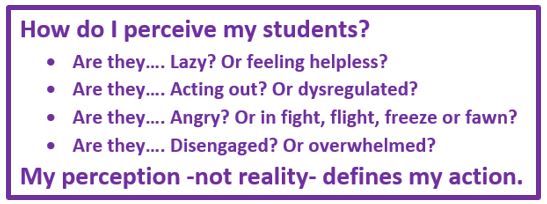
Using Hopeful Pedagogy starts from our perceptions and actively choosing our actions to support Learner Agency for every student. To help students choose to make the choice to learn for their own benefit instead just to pass a given assessment or task. To support students’ hopes and help to embark on a learning path for a better future and support the idea of lifelong learning and having meaningful learning experiences.

Hopeful Pedagogy (or Hopeful Andragogy – my students are earning their M.Ed degrees) is an important part of contemporary education. And the bottom line is: “Educating, regardless of age is about leading others in meaningful and hopeful ways.” [3]

[1] Learner-centered https://psycnet.apa.org/doiLanding?doi=10.1037%2Fspq0000589 SEL: https://casel.org/fundamentals-of-sel/what-is-the-casel-framework/ Trauma-Informed practices: https://www.nctsn.org/ and https://en.wikipedia.org/wiki/Trauma-informed_care

[2] Agency defined on p. 443 in Zelazo, P. D. (2020). Executive Function and Psychopathology: A Neurodevelopmental Perspective. Annual Review of Clinical Psychology16.

[3] Prefontaine, I. (2023). Re-imagining Teacher Education as an Andragogy of Hope. an Andragogy of Hope” (2023). International Conference on Hate Studies. 5. https://repository.gonzaga.edu/icohs/2023/seventh/5
Increasing Learner Resilience

1 Feb

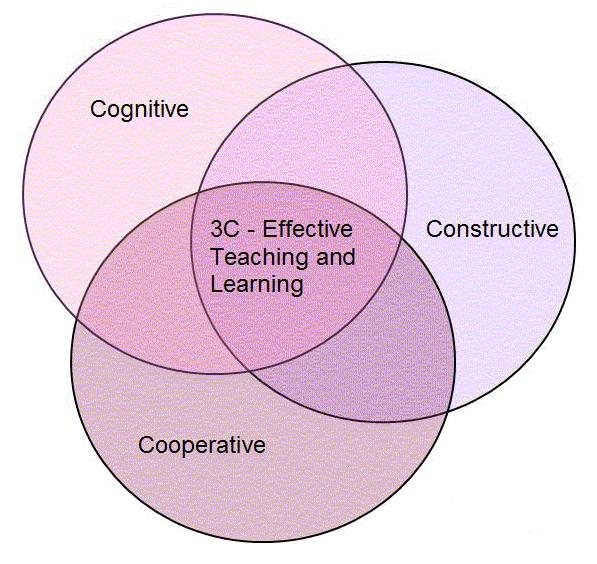
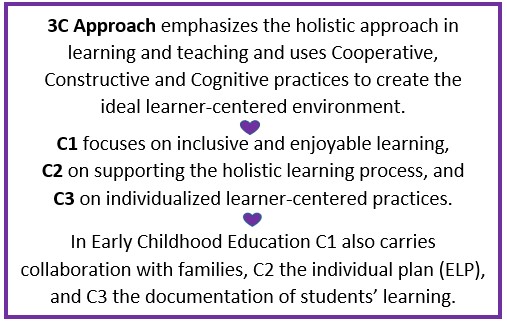
One of my favorite projects since 2020 is mentoring a pre-K-6 school in South Africa. They wanted to “Finnish” their school and make it more learner-centered, so we created a plan to modify their curriculum and focus on implementing instructional changes and embed SEL in small steps throughout the schoolyear. The foundation is in Cooperative, Constructive and Cognitive practices to collaborate with families and students, create individual learning plans for all students and focus on documenting learning when it naturally happens (instead of formally assessing every student and their skills), and marking all the developmental milestones and learning achievements in the end of the day – sometimes by sending a picture to the parents, too, to keep them connected and informed.

We all know that children learn a lot on their own, and we want to empower their explorations as much as possible to help build learner resilience – a fundamental aspect of our development, relateing to agency and self-efficacy. Agency is our ability to make choices and self-efficacy our belief in our abilities to do thing, like learning.

Fortunately, we are born curious and ready to learn. The only thing we need to do is find a way to cooperate with that curiosity and help students preserve their interest in learning and their sense of wonder – because that is where all true learning starts: wondering if, how, when, why….

As having choices helps children to build stronger learner agency and self-efficacy, I built an infographic about learner-centered education, hoping that it would be easy for Early Childhood Educators to view on mobile phones: https://choosinghowtoteach.blogspot.com/2022/04/empower-students-to-learn.html I think we cannot overemphasize the natural learning process and building on children’s play to help them learn more. Simply put, the EMPOWER stands for Environment, Motivation, Process, Ownership, WHY? Empathy & Emotions and Relationships.

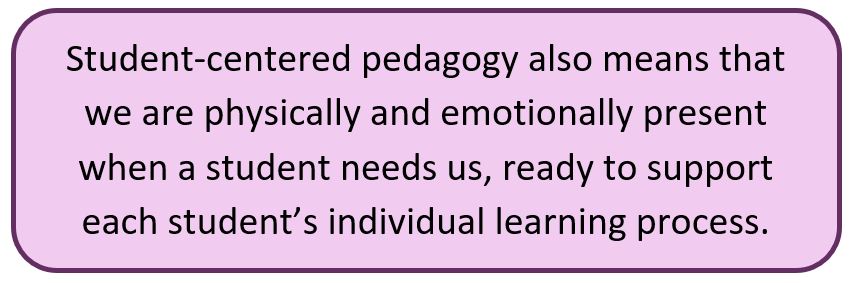
Supporting students’ agency and resilience as learners is easy to do by guiding and supporting students’ natural curiosity and offering help when needed, and figuring out together why things happen. These learning experiences are a tad harder to build, as they don’t fit into pre-structured curricula. But learning cannot be restricted into universal format – learning experiences always have individual flavors and take-aways as we are building on things we have already learned.

This is also the best way for supporting adult learning resilience: offering choices for obtaining the information (reading, listening, watching, discussing…) and demonstrating the competencies (both existing and new ones) by producing a plan or presentation or portfolio, and supporting the self-efficacy of adult learners.

Meaningful Learning Experiences

18 Jan

What makes a learning experience a great one?

(It is not the visually appealing design or charisma of the teacher/instructor, even though both of these can make learning experiences nicer.)

The answer lies in the “a-ha!!” moment when we realize something new and connect the dots. This is the magical ingredient that makes learning meaningful by combining the cognitive understanding with an emotional awareness (SEL – identifying personal assets and emotions).

Now, how to lead more students into these a-ha!! moments – this is the real question we need to ask. And part of the answer is that one size can never fit all. To me, this makes teaching such a wonderful profession! Every day is a discovery day to understand how to support an individual student. We are trusted with great responsibility! However, being a teacher is not easy. Especially when mandated to “teach to the test” or “cover so and so much of curricula” – because these expectations have very little to do with learning. They are only focusing on teaching – and every teacher knows that what is taught is not necessarily learned!

Learning and teaching are two different things. They are two different processes that are often put into the same frame of reference (education) and sometimes even happen in the same physical or virtual space (classroom). Sometime we think that students are not motivated to learn new things, but this is a huge misconception! Children are natural born learners; it is our ultimate survival skill. But – for a variety of different reasons – we may not enjoy the experience of being taught.

When learning is seen as an in-built force within your students, the teaching job became easier. By becoming a facilitator for learning and guiding students to build their own knowledge, the teacher has taken a huge step towards supporting learners’ agency and autonomy. Starting with learning outcomes (what students will be able to know or do) we choose the information needed and plan for a selection of activities and assessments to help our students to learn what is needed. Then we add support for metacognition and a selection of recommended learning strategies.

Metacognition: The awareness and perceptions we have about ourselves as learners, understanding of the requirements and processes for completing learning tasks, and knowledge of strategies that can be used for learning.

With current technology this can be very easy to do! Lecturing is unnecessary as we have countless (better) ways for providing the information and concepts for students (books, videos, podcasts, walkthroughs, glossaries, wikis, etc.). The most important part of instruction is to share useful frameworks with learners to help them understand the context and connections (within the topic and its’ relations to other learning). These connections are vitally important, because learning process starts with external interactions and is completed with internal elaboration. [1] Learning facilitation means exactly this: supporting each student’s individual learning process and providing choices (within pedagogically/andragogically appropriate boundaries) for constructing their own understanding. Metacognitive skills are crucial tools for everyone because:

  • it really is about reflecting higher order learning (often described as critical thinking and problem solving)
  • we need the ability to monitor and regulate our own learning
  • in information societies learning cannot stop in graduation

Another important part of experiencing a meaningful learning experience comes from getting support when needed – not for finding the correct answers, but for strengthening our individual learning processes. While we all learn in the similar way by interacting with environment and then internally elaborating to make sense of the new information and fit into our own existing knowledge structures, we also have individual differences like the quality and amount of our previous knowledge. Understanding and supporting these personal processes [2] is the key to fostering lifle-long learning, which is why teachers need to be proficient with both SEL and Trauma-Informed Practices.

Making sure that we focus on learning as an individual process makes it possible to keep on supporting students throughout k12 education and beyond. To take this one step further, remember: Truly learner-centered experiences are designed with students, acknowledging their previous knowledge, and providing different learning modalities and assessments to choose from. Here is more about learner-centered design, which obviously makes learning engagement much more meaningful for participants. APA (American Psychological Association) has this great resource about creating meaningful learning experiences!

After SO many years in education, my favorite question still is: “How can I support your learning today?”

[1] Illeris, K. (2003). Towards a contemporary and comprehensive theory of learning.  International journal of lifelong education22(4), 396-406.

[2] Bransford, J. D., Brown, A. L., & Cocking, R. R. (2000). How people learn: Brain, mind, experience, and school. Washington, D.C.: National Academies Press


How to enjoy learning?

25 Jul

In the beginning of our lives, we all love to learn! Anyone, who has been with preschoolers, knows how excited they are about learning new things. Observing high school students or people in Professional Development – well, not so much visible enjoyment there. Why? What went wrong?

Learning is a survival skill we all are born with. But at school we often turn the intrinsic learning (and learning interest) around to something else, something measurable – schooling, or being taught. At worst, schooling kills the intrinsic interest to learning because we figure out that we are doing things wrong while learning on our own. In most cases it just decreases our learning enjoyment and makes us go through the motions and activities for an external reward – for a grade or diploma. However, there are different, better ways to support learning and engagement than grades and diplomas.

First – we must find again our own learning enjoyment as educators. A teacher who is not interested in learning should seek different employment. I know this is very strong statement, but it is not easy to fake something as fundamental as one’s desire to learn. Emphasizing anything else but learning is a mistake when we want to improve education – yet many school improvement plans focus on student “achievement” or “performance”, which are very different because they are snapshots of what a student knows or can do at a single point of time. A test score cannot even pinpoint where in the learning process the “magic” happened. My dear visitor, I am assuming that you are reading this because you are ready to engage in your own learning process and want to learn something new.

Second – let’s agree that learning happens everywhere, not only at school. Anything can be learning experience when we have the mindset and dispositions that support life-long learning, which should be the main outcome of an educational system (and it is often mentioned in missions and value statements). However, students’ everyday experiences are not about engaging their own learning process – mostly they are just trying to assimilate tons of information, which is very hard without a meaningful learning context, and easily leads to surface or strategic learning approach. We must help students to learn on their own! This is one example how to do it: Pre-school/kindergarten in Finland is dedicated to learning how to learn (instead of learning reading and math). The Finnish curriculum highlights interactions, meaningfulness and joy of learning:

Answers were sought to the question on how to best promote learning.

The active involvement of pupils, meaningfulness, joy of learning and school cultures

that promote enriching interaction between pupils and teachers are at the core of the new curriculum.

Finnish National Core Curriculum.

As educators we must support students’ holistic learning. Reminding students and parents that learning can happen anywhere and finding ways to integrate students individual learning experiences as parts of their formal learning portfolio is a great start towards increasing learning enjoyment. (The same principle obviously applies to educators’ Professional Learning – which is often better than Professional Development!)

Third – we must strive to make learning more meaningful for students. This is a hard one, because we all are so different. One size just cannot fit all! Therefore, offering choice for obtaining information and demonstrating competency/mastery is crucially important. We do this while differentiating instruction, but often forget (or don’t have time) to include students’ insight of their learning preferences into improving their learning experiences. Yet, in order for learning to be meaningful, students must have a part in the learning design process. This is not a new idea, there is more than 100 years of research about benefits of learner-centered approach and treating learners as co-creators and partners in the teaching and learning process [1](lots of familiar names there: Dewey, Montessori, Piaget, Vygotsky, Rogers among others).  APA – American Psychological Association has emphasized the importance of meaningful learning since 1990 by highlighting the learner-centered approach and 2015 updating the approach to Top 20 principles for PreK-12 education. I wish every teacher had a copy of these documents!

Bottom line: We can and must support students’ learning enjoyment as well as enjoy our own learning experiences!

We have many choices for doing this. The following blog posts are helpful :

Learner-centered education

Is learning a product or process?

Engaging student in their own learning process

Choosing How to Teach

References:

[1]  Summarized from the APA Work Group of the Board of Educational Affairs (1997, November). Learner-centered psychological principles: Guidelines for school reform and redesign. Washington, DC: American Psychological Association. https://www.apa.org/ed/governance/bea/learner-centered.pdf and http://www.jodypaul.com/LCT/LCT.PsychPrinc.html and  https://en.wikipedia.org/wiki/Student-centered_learning

Learning Strategies – part 1

22 Jul

One important part of Teachers’ Pedagogical Knowledge is the skill of supporting students’ individual learning processes. For Learning and Development this means fostering each student’s individual learning through knowledge of human development, information processing, attributions and other theories that relate to how we learn. For Dispositions it means understanding how perceptions of self, others, values and beliefs affect learning process.

Remember, these are our professional competencies! Sometimes we forget that our students don’t have the same knowledge and insight into learning as we do. This is why we must explicitely teach appropriate and effective learning strategies to our students.

While the strategies themselves – ways to pace learning, to memorize and recall, make connections and aim for deeper learning – remain pretty much the same throughout our educational experiences, the way we use them is directly related to our subjective learning needs.  These needs depend on our personal preferences, developmental age, knowledge structure, and the perception of why we are learning. Discussing learning strategies and helping students to choose the best ones for the purpose is an easy way to make the everyday learning experiences more personal.

Today there are various initiatives to personalize learning, ranging from software programs to truly learner-centered design for instruction. Teaching students about different learning strategies is an excellent way to make learning more personal and help students have more ownership over their own learning process.

Personalized learning is tailoring learning for each student’s strengths, needs and interests — including enabling student voice and choice in what, how, when and where they learn — to provide flexibility and support to ensure mastery of the highest standards possible.[1]

I am always a little worried with the -ized ending in the words when we discuss education because it often implies someone (or something) else than the student to make decisions about their learning. My biggest take-away from the quote is the increased student voice and choice, because it IS their learning experience we are talking about.  Experience is such a subjective phenomenon that it can’t be standardized. What we can do as teachers, is to empower, help and support the learning process, and provide more choices and more tools for our students. Learning is a personal endeavour. The strategies we recommend to our students should reflect that fact!

Emphasizing personal learning approach is not a new fad. APA has emphasized the importance of personal learning since 1990 by highlighting the learner-centered approach and 2015 updating the approach to Top 20 principles for PreK-12 education. I wish every teacher had a copy of that document!

The Learner-Centered Principles apply to all learners, in and outside of school, young and old.  Learner-centered is also related to the beliefs, characteristics, dispositions, and practices of teachers – practices primarily created by the teacher.When teachers and their practices function from an understanding of the knowledge base delineated in the Principles, they:

(a) include learners in decisions about how and what they learn and how that learning is assessed

(b) value each learner’s unique perspectives

(c) respect and accommodate individual differences in learners’ backgrounds, interests, abilities, and experiences, and

(d) treat learners as co-creators and partners in the teaching and learning process.

Changing the focus from universal delivery of information (i.e. traditional teacher-centered educational model) to learner-centered or personal learning approach (i.e. learning facilitation) is the first step.  Then, changing assessment and grading to reflect students’ learning process and engaging in non-punitive assessment model is the second step.

This is the beginning of Learning Strategies blog posts. I hope these learning strategies will help you to help your students.


🙂

Nina


—–

[1] Patrick, S., Kennedy, K., & Powell, A. (2013). Mean what you say: Defining and integrating personalized, blended and competency education. Report, October.

[2] https://www.apa.org/ed/governance/bea/learner-centered.pdf and http://www.jodypaul.com/LCT/LCT.PsychPrinc.html


Self-determination and learning process

12 Aug

People are curious by nature. This curiosity is a great reason for learning something new. Sometimes, we as teachers, work against this natural flow of learning and end up in a situation where students resist learning. Here are 5 rules for avoiding this mistake:

  1. Build a classroom climate that supports learning. This can be done by engaging in frequent discussion about how subjective learning is, and how everyone learns and understands in a unique way – based on their previous knowledge and experiences. Provide choices for students to engage in learning and demonstrate their competence.
  2. Help students to choose to learn. Often students are mandated to attend school, which doesn’t create a great starting point for cooperation, however, providing opportunities for autonomy, competence and relatedness fosters engagement and motivation to learn (as argued in SDT – self determination theory). Validating students’ concerns and opinions helps to engage in open and honest communications. Students are in your class to learn. You are there to help them to learn. You didn’t mandate them to attend school. Try to step away from the power struggle of why, to making the classtime as meaningful as possible.
  3. Avoid rewards and punishments. They reduce the intrinsic motivation to learn and point students’ focus towards getting a reward or avoiding a punishment. All time and effort placed in creating a fair rewarding system is time away from the most important thing in classroom: learning. External regulation leads to external locus of control – and what we really want is for students to become self-regulated learners.
  4. Emphasize cooperation. Learning doesn’t happen in a vacuum, it is situational and contextual, which only emphasizes the importance of the rule number 1. Plan for plenty of students’ talking in your lessons. Students learn from each other, and sometimes it is easier for them to understand a concept when another student explains it, just because their vocabulary is similar (as academics we often have lots of teaching jargon in our sentences).
  5. Recognize competence and help the student to move forward. Everyone is on their own learning path, therefore expecting all students to have exactly the same competence is foolish. Provide feedback to influence the outcomes of students’ learning actions towards meaningful growth – this is the essence of Growth Mindset! “Effective teachers who actually have classrooms full of children with a growth mindset are always supporting children’s learning strategies and showing how strategies created that success.” [1]

Self-determination theory discusses motivation, emotion and development. Intrinsic motivation (e.g. doing something because we are interested in doing it) is much stronger predictor for future educational success than extrinsic motivation, which is associated with surface and strategic learning approaches.  The three principles in SDT are:

  • Autonomy – have choices and be an agent of one’s own life and learning
  • Competence – reach goals and move towards meaningful growth
  • Relatedness – connect and interact with others

These are basic human needs. Providing ample opportunities for students to choose, grow and relate – every day, in every class – makes learning easier and teaching more successful.


References:

[1] Niemiec, C. P., & Ryan, R. M. (2009). Autonomy, competence, and relatedness in the classroom: Applying self-determination theory to educational practice. School Field7(2), 133-144.

[2] Zimmerman, B. J. (2013). From cognitive modeling to self-regulation: A social cognitive career path. Educational psychologist48(3), 135-147.  Available at researchgate.

[3] Dr. Dweck, 2016,  in an interview with Christine Gross-Loh  https://www.theatlantic.com/education/archive/2016/12/how-praise-became-a-consolation-prize/510845/

Learner Agency – an important part of Deep Learning

13 Aug

Learner agency as a concept in 21st century education relates tightly into students’ perceptions of their own learning experiences.  Agency is the capacity to act, to make decisions about one’s own life and learning.

Deep learning requires ownership and individual engagement with the content. Here is a succinct definition for deep and surface level learning strategies: “the basic processing operations that describe how students react to and interact with the learning material and with people present in the learning environment in order to enhance domain-specific knowledge and skills” (Boekaerts, 2016, p. 81).

This is why learner agency is so important. Students must develop their skills in independent judgment. In order to do that they need ample opportunities to practice choosing. Being or becoming responsible for one’s own actions is one of the possible byproducts of public education.

Recent research recognizes the importance of learning experiences that emphasize autonomous and agentive participation, including the opportunity to have control over oneself and one’s learning environment. There are various ways to perceive agency in the classroom.

It is different to learn something than to be taught something. Being taught doesn’t necessarily mean that learning happens. It only means that the student has been present when the teaching has happened. This is very detached view of learning, and hardly motivates students to try. Memorizing content until the next test is included in students’ perceptions of detached learning.

Sometimes students feel they belong to the school community, which makes them more compliant in learning activities, and a little bit less eager to exercise their agency. In these cases students depend on their teachers and just go through the motions and learning activities, as they are expected to do.

Open dialogue can help students choose to actively engage in their own education and to become more accountable for their own learning. Teachers should support growing agency in the classroom, because the ownership contributes to engaging in deep learning. Students who have strong ownership are interested in learning more.

Deep learning experiences can lead students to become ubiquitous learners, who learn anytime, anywhere.  This unbound learning extends beyond school walls and hours, but we as educators must learn to acknowledge and credit this very independent learning.

Students’ perceptions of their agency can span over several categories. These descriptive categories cannot be used to label students.

In formal education the tradition has been to perceive students as objects of the teaching-learning interaction, with the expectation for students to absorb the facts presented by teachers or faculty.  This view of education doesn’t fit into contemporary learning theories that emphasize knowledge construction. Educational research shows how important factors students’ ownership and knowledge construction are for academic success, yet many educational practices still rely on teacher-centered instructional models. Why?  This seems to support the perceptions of detachment.

There are many ways to support agency in the classroom.

Building a learner-centered environment where students can choose how they practice and learn is an easy way to support learner agency. Students must have choices while selecting their learning resources.  Researchers say that agency is about understanding what choices and resources are available (Kumpulainen et al., 2011, p. 13). Becoming responsible for one’s own learning can and must be fostered in the classroom context.

Supporting learner agency improves the quality of students’ engagement in their own learning process, and help students become ready for the requirements of living in 21st century.  Examples of engagement quality are “going through the motions” vs. “I make my own motions” and “being a classroom sheep” vs. “trying to understand how to transfer learned”.

The table below displays components of learner agency and students’ perceptions of it, as see in my research.

Sometimes agency may seem negative, for example when a student decides to leave homework undone, because they are okay with a grade that is less than perfect. Obviously, this is only a problem when learning is seen as a product, instead of (life-long) process.

Understanding students’ perspectives and using practices that support learners’ agency helps teachers create better teaching-learning interactions.  These learner-centered interactions will improve the quality of students’ learning experiences and also their academic achievement (e.g. Reyes et al. 2012).

The importance of intentional engagement, subjectivity and shared classroom experiences cannot be overemphasized as means for deeper learning. Students must have an opportunity to exercise their agency.

More about Learner Agency at Nina’s Notes

—–

Boekaerts, M. (2016). Engagement as an inherent aspect of the learning process. Learning and Instruction43, 76-83.

Kumpulainen, K., Krokfors, L., Lipponen, L., Tissari, V., Hilppö, J., & Rajala, A. (2011). Learning bridges – Toward participatory learning environments. Helsinki: CICERO Learning, University of Helsinki.

Reyes, M. R., Brackett, M. A., Rivers, S. E., White, M., & Salovey, P. (2012). Classroom emotional climate, student engagement, and academic achievement. Journal of Educational Psychology104(3), 700 – 712.

Smith, N.C. (2017). Students’ perceptions of learner agency: A phenomenographic inquiry into the lived learning experiences of high school students. (Doctoral Dissertation).  Northeastern Repository

NCS Dissertation PDF

Learning dispositions and Real Life

31 Dec

Learning and studying dispositions are the filters we use when facing a learning situation. Sometimes these dispositions are helpful, other times they may hinder the learning process. 

We “inherit” these filters from family and friends – and media, too! – and learn to use the filters during all our learning experiences.  We sort things into important and forgettable “bins”, based on the value we perceive the learning content to have. (Show me a teacher who has never heard a student ask: When will we ever use this?!) 

The connection between learning and Real Life (RL) is important for all students, from kindergarten to higher education. Learning dispositions relate to the RL connection and thus regulate our interests, efforts and motivations to learn.  Growth mindset  is one part of the dispositions, as well as students’ self-efficacy beliefs and academic self-concept. Curiosity is yet another important concept for learning dispositions, because learning starts from wondering.

For some students curiosity or persistence can be enough to make them ready, willing and able to learn. Other times students need additional tools, and providing opportunities for risk-taking, concentration or independence might be necessary.  In this case it is crucial to have a non-punitive assessment method to support the positive outcomes of learning. Rubrics and feedback loops to be used before final evaluation are very necessary to emphasize the benefits of deep engagement, and fostering the development of future learning dispositions. Communication, collaboration and co-regulation are important learning activities for building positive learning dispositions, because sharing one’s own RL with others leads to deeper learning and understanding. 

I’m trying to figure out how to support students in creating a disposition that helps them to enjoy learning. The obvious reason for this is the fact that we engage much deeper in the activities we enjoy. And with deep engagement, we learn more. The information is not forgotten the next day or after the test, because it has some RL personal significance. Deep learning is seen to be more meaningful than reproductive learning (Lonka et al, 2004).

One possible answer for supporting deep learning dispositions is to adopt a teaching disposition that emphasizes authenticity and empowers engagement (Kreber, 2007).  Authentic teaching focuses on the RL connection, helping students to see the importance of learning in everyday life, so that they can engage in deep, personal learning. Authenticity and supporting helpful learning dispositions makes it easier for every student to be successful in their studies – and not only in reaching graduation, but also engaging in life-long learning and building their own knowledge.

Authenticity seems to be one of the main threads in progressive education. I think it is important to remember that students are not learning for school, but for life. Their own personal RL, which is different from the one any of their friends and peers are living, is a major component of the learning disposition. That’s why discussing learning dispositions is so important. Students are making the value judgment of their learning anyway, so we as learning professionals should be helping them to find a helpful disposition. 

We are preparing students for the world that is a complex mixture of cultures and diverse beliefs. Knowledge is so much more than a fixed bunch of facts to be memorized. While memorizing disconnected pieces of information may be a nice trick in trivia game, students need to understand the contexts and connections of that information. Where did it come from, and is it trustworthy?  And an especially important question is: how can we use this information?

Misusing information is easy because it is shallow and has no situationality or contextuality – these are qualities of knowledge, where an individual has constructed an understanding of how given information fits into her/his worldview, beliefs and values. These are the same building blocks learning dispositions are made of. 21st century learning cannot be just memorizing factoids.

Learning disposition can help students find RL connections and to engage in deep learning. But this needs to be communicated clearly to the students. It is insane to imagine that every student would be 100% interested in deep learning every detail of their every schoolday. In some cases it might not be the content to be learned that a student perceives being important, but perhaps learning more about oneself and how to support one’s own learning.  In this case content learning happens as a byproduct. Emphasizing the change, resilience and meaning-making as important parts of learning process leads students towards a discovery of positive learning dispositions and deeper, meaningful learning experiences.

— — —

Kreber, C. (2007). What‘s it really all about? The Scholarship of Teaching and Learning as an Authentic Practice. International Journal for the Scholarship of Teaching and Learning1(1), 3.

Lonka, K., Olkinuora, E., & Mäkinen, J. (2004). Aspects and prospects of measuring studying and learning in higher education. Educational Psychology Review16(4), 301-323.

Shum, S. B., & Crick, R. D. (2012,April). Learning dispositions and transferable competencies: pedagogy,modelling and learning analytics. In Proceedings of the 2nd International Conference on Learning Analytics and Knowledge (pp. 92-101). ACM.

Volet, S., Vauras, M., & Salonen, P.(2009). Self-and social regulation in learning contexts: An integrative perspective. Educational psychologist44(4),215-226.

Learning-centered education

12 Feb

What is the central focus in your classroom or course? What is in the nexus of your instruction? Is it learning, performing, socializing, producing (or reproducing), obeying, memorizing, or something else? What is the most important thing for your students to remember from your class or course?

It is surprising to realize how often our everyday teaching practices contradict our teaching philosophy!

Thinking about the core purpose of education: helping students to learn. How easily it gets diverted from the original focus on learning, and becomes a rite of passage or about measuring academic performance!

In everyday language we use such a huge a variety of definitions for “learning” – like answering correctly, passing,  “learning a lesson”,  memorizing, and so on – that it is easy to get confused and think that measured performance is equal to learning. I don’t think it is. Sometimes performance as learning means just cramming information into short term memory in order to pass an assessment or evaluation. Then that information can be forgotten, and it never becomes the much needed intellectual capital of knowledge.

When we simply measure performance with assessments and evaluations, we only get to see the end result of students’ learning process. We don’t know how the skill or knowledge was acquired. We just know that this student passed an exam, or created an acceptable product.  But the “learning” behind the score may not not what the educational systems wish it was: this kind of surface or strategic learning is usually not learning for life. It is memorizing for survival in testing-oriented educational context.

To change the learning context we must focus much more on supporting students’ learning process, because acquiring transferable and life-long knowledge and skills is exactly what real learning is, or what it should be. When we are too busy cramming all the minor details of our beloved subject matter into the lesson or syllabus, we easily forget what learning really is about: for students to construct their own understanding of the subject. Not only reproduce something the textbook says, but to use critical thinking in order to fully understand the topic and how it relates to the world where student lives.  Decontextualized learning is shallow or superficial by default. This is why I am very critical about prescriptive curricular and instructional design – students have different ways of thinking, different ways of learning, and different ways of knowing, and education has to accommodate those needs in order to be effective!

The easiest ways that I know to engage in learning-centered education is to provide choices for students. Thinking about learning as acquisition and elaboration of information (Illeris, 2003), it is handy to let students choose how they obtain the information. Sometimes letting students have a choice of where they get the information is beneficial (yes, I think wikipedia is a good starting point, but obviously students will have to dig deeper than that, and provide appropriate references for their sources). Also providing choices for learning strategies supports both students’ self-regulation and their learning process. Does it really matter how your student learned the concept or topic, if they learned it well? In order to help students’ independent learning skills to grow even more,  it is a great idea to provide choices for assignments and assessments, and use rubrics and formative feedback to guide students to the level of competence where they need to be. Naturally, each student will arrive to that point on their own, individual pace.

I know that standardized tests don’t really fit into this picture, but their purpose is not to support students’ learning. Those tests exist to provide numerical data for stakeholders in the form of summative evaluations, not to promote learning-centered education. As teachers we may not have enough voice to change the current educational policies, but engaging in learning-centered education helps students to be ready for both the tests and life.

How about making learning the central focus of your instructional practice?

N3C

Illeris, K. (2003). Toward a contemporary and comprehensive theory of learning. International Journal of Lifelong Education, 22(4), 396-406. doi:10.1080/0260137032000094814

Visible and invisible learning and teaching

13 Jan

Learning process is anything but linear and visible.

Best learning experiences are often messy and hard, but oh-so-rewarding. For education professionals it is sometimes nice to think about how the learning process is rolling forward like a simple cycle (like Kolb’s), and emphasize the perception and processing, but the reality is far more complex. There are pits, loops and rabbit holes along the way.

The discussion of learning process must include these invisible or intermediate processes of learning, and acknowledge the personal preferences that make learning stick. One size does not fit all.

Learning process

Our personal preferences for the intermediate processes of learning are the ways we prefer to perceive, choose, store, reflect and retrieve the data and information needed for learning. These preferences result from our previous experiences in life and learning, and they can either help or hinder our academic learning process (Green et al. 2012). Acknowledging the individual preferences and emphasizing the importance of metacognitive skills in learning helps to focus more on these invisible parts of learning process.

Teaching the metacognitive skills could be called invisible teaching, because it requires significant amount of interactions between the teacher and the student – interactions that may or may not relate directly to the learning objectives.

Learning happens everywhere. This must be acknowledged in the learning design process, because without transfer to personal lives of students the formal learning is quite worthless. (This is obviously not a new idea, non scholae sed vitae has been around for a long time.) Unfortunately, teaching is sometimes seen as a simple act of delivering information.  In such learning environments evaluations of learning (or performance) are based only on the tests, exams, essays, worksheets and other ways of demonstrating the  mastery of the subject/topic.  Grades are handed out to students in the end of term or semester, but what do these grades actually mean?

Invisible learning could be called unvalued leaning, because it is not included in the evaluations conducted in formal education.  To be effective, contemporary education must strive “to capture intermediate learning processes in student work,” not just outcomes (Bass & Enyon, 2009, p. 15). One way to broaden the evaluation of learning is to use performance assessments with rubrics, so that students know what they are supposed to demonstrate, and use all their knowledge in the tasks, not just a small, segmented amount of knowledge that belongs to that specific class.

The challenge for contemporary education is to include the invisible learning into formal learning. Learning should always be life-long, life-deep and life-wide.  Students have lots of knowledge gained outside of the school systems, and in information societies we cannot – and should not – try to restrict students’ access to information. Visiting websites like wikipedia should be encouraged, with the constant reminder of not taking any information at a face value.  Not even what is printed in the textbook. 🙂

Bridging this informal or invisible/unvalued learning to formal education helps students to see their classroom learning more meaningful because it carries personal significance. Emphasizing invisible learning empowers students to engage in self-regulated learning and be more active in building their own, personal knowledge-base.

What is the easiest way for invisible learning to become valued in your class?


Bass, R. and Eynon, B. (Eds.). (2009). The difference that inquiry makes: A collaborative case study of technology and learning, from the Visible Knowledge Project. Academic Commons. Retrieved from http://academiccommons.org/).

Green, J., Liem, G. A. D., Martin, A. J., Colmar, S., Marsh, H. W., & McInerney, D. (2012). Academic motivation, self-concept, engagement, and performance in high school: Key processes from a longitudinal perspective.Journal of adolescence35(5), 1111-1122