My students are teachers and instructors earning their M.Ed. degrees. I discuss adult SEL every day in my calls with my students to support their learner agency, and also share SEL images in my emails to students. I do this to ensure we are creating a safe learning environment – because we all need that safety to practice responsible decision-making. And truly effective teaching that supports students’ deep learning (not just shallow memorization of facts until passing the test) requires using all three main learning theories – cognitive, constructive and cooperative.
Adult SEL is an integral part of human development – and the day when we stop learning is also the day when we need to stop teaching. Simply because education is an ever-evolving profession, and we need to adjust to the change. I am not talking about “learning a new curriculum”, but how support students’ individual learning. The first part is checking our own assumptions so that we can respond to students’ needs instead of just reacting to their behaviors. This is not always easy to learn! Yet, today when we know so much more about Adverse Childhood Experiences (ACEs) [1] we also understand that students need help in managing their need and emotions. This is also why I believe that learning about Trauma-Informed Practices (TIP) [2] is extremely helpful for teachers, instructors, and educators in all capacities.
Learning to use Positive Regard is easier when our Adult SEL competencies increase. While Relationship skills are essential for being a teacher, the two other important competencies for responding to the needs are self-awareness and self-management – because misbehavior can seriously push our buttons, and we all know that sometimes students are (malevolently) smart to do exactly that! It can become almost like a game – we could call it the “who can derail the teacher from teaching the intended lesson” – game.
When teachers’ adult SEL needs are supported, the whole school community gets enhanced. Simply because we cannot support students if we as professionals are not learning about the toolkit we can use – and I am talking about the the “toolkit” in a broad sense, because different environments, different populations and even different curricula may require different tools. This is the situational aspect of teacher PD (and the reason why “canned” solutions seldom work). Teaching is always, ALWAYS situational and contextual.
If your district is not providing Adult SEL as a PD option, please consider focusing on Adult SEL in your PLN (Professional Learning Network) or PLC (Professional Learning Community)! There is a great Linked In group “Teachers who Coach” with a wealth of information about helpful teaching strategies to build connections with students!
Our learning experiences have a huge impact on our future, and on our learning. The good part of this is that teaching is a relationship between the teacher and students, and we can choose to provide those positive learning experiences for our students. The hard part is that we all bring our past experiences and expectations into the classroom, both teachers and students. For some students the classroom environment is the safest and happiest place they have ever experienced. It is very hard to focus on learning if one is scared or hungry. Recent research suggests that 25% or more of students have experienced trauma or ACEs. [1] We can choosehow we perceive students and their actions.
Understanding the perspectives of other people is an important part of #SEL social awareness, and as teachers we have great opportunities to be examples of this for our students. Learning to respondto the (undesirable) behaviors of others instead of reacting to them is a life skill we all need. By responding instead of reacting we can engage in tSEL – transformative SEL – supporting students identity, agency, belonging, collaborative problem-solving and curiosity!
When we choose tosupport all students and build safe learning environments, our students can learn to trust teachers and other students and people in general. This is the important first step. The positive experience of knowing the rules and how to ask for help are important building blocks for students’ self-awareness and self-management – two fundamental #SEL skills for understanding and managing our emotions, thoughts and behaviors. We cannot thrive in the society without these skills, but they are equally important for building relationships with other students.
Collaborating successfully with peers is an extremely powerful positive experience in the classroom – we should never underestimate it! Often students can understand a new concept more easily if a classmate explains it, just because they are close to the same level of language development. For us, as professional educators, some concepts are so “clear” that we don’t even consider having to explain its meaning. Peer collaboration helps students to learn the important #SEL relationship and life skills like seeking and offering help and resolving conflicts constructively.
Purposefully designing healthy learning environments by designing these Positive Childhood Experiences (PCEs) can protect our students againstACEs(Adverse Childhood Experiences), because they build HOPE – Healthy Outcomes from Positive Experiences [2]. And when we design and provide positive learning experiences, we also help our students to learn to enjoy learning. This has a huge impact for their futures. Learning enjoyment increases the chances for students to engage in transformative life-long learning[3]. How awesome is this?!?
This is exactly WHY education is my chosen life-long career! 🙂
[1] Scott, J., Jaber, L. S., & Rinaldi, C. M. (2021). Trauma-informed school strategies for SEL and ACE concerns during COVID-19. Education Sciences, 11(12), 796.
[3] Jagers, R. J., Skoog-Hoffman, A., Barthelus, B., & Schlund, J. (2021). Transformative social emotional learning: In pursuit of educational equity and excellence. American Educator, 45(2), 12. https://files.eric.ed.gov/fulltext/EJ1304336.pdf
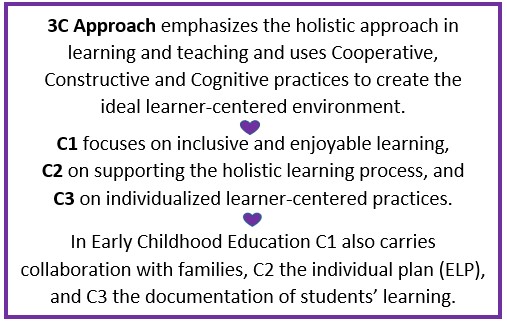
One of my favorite projects since 2020 is mentoring a pre-K-6 school in South Africa. They wanted to “Finnish” their school and make it more learner-centered, so we created a plan to modify their curriculum and focus on implementing instructional changes and embed SEL in small steps throughout the schoolyear. The foundation is in Cooperative, Constructive and Cognitive practices to collaborate with families and students, create individual learning plans for all students and focus on documenting learning when it naturally happens (instead of formally assessing every student and their skills), and marking all the developmental milestones and learning achievements in the end of the day – sometimes by sending a picture to the parents, too, to keep them connected and informed.
We all know that children learn a lot on their own, and we want to empower their explorations as much as possible to help build learner resilience – a fundamental aspect of our development, relateing to agency and self-efficacy. Agency is our ability to make choices and self-efficacy our belief in our abilities to do thing, like learning.
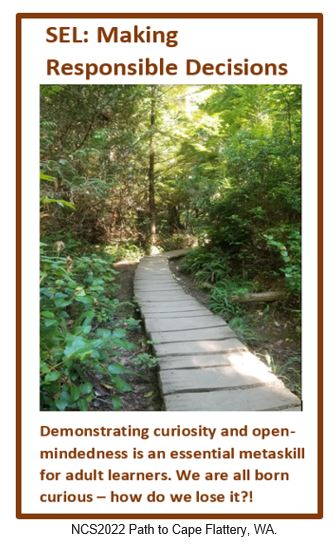
Fortunately, we are born curious and ready to learn. The only thing we need to do is find a way to cooperate with that curiosity and help students preserve their interest in learning and their sense of wonder – because that is where all true learning starts: wondering if, how, when, why….
As having choices helps children to build stronger learner agency and self-efficacy, I built an infographic about learner-centered education, hoping that it would be easy for Early Childhood Educators to view on mobile phones: https://choosinghowtoteach.blogspot.com/2022/04/empower-students-to-learn.html I think we cannot overemphasize the natural learning process and building on children’s play to help them learn more. Simply put, the EMPOWER stands for Environment, Motivation, Process, Ownership, WHY? Empathy & Emotions and Relationships.
Supporting students’ agency and resilience as learners is easy to do by guiding and supporting students’ natural curiosity and offering help when needed, and figuring out together why things happen. These learning experiences are a tad harder to build, as they don’t fit into pre-structured curricula. But learning cannot be restricted into universal format – learning experiences always have individual flavors and take-aways as we are building on things we have already learned.
This is also the best way for supporting adult learning resilience: offering choices for obtaining the information (reading, listening, watching, discussing…) and demonstrating the competencies (both existing and new ones) by producing a plan or presentation or portfolio, and supporting the self-efficacy of adult learners.
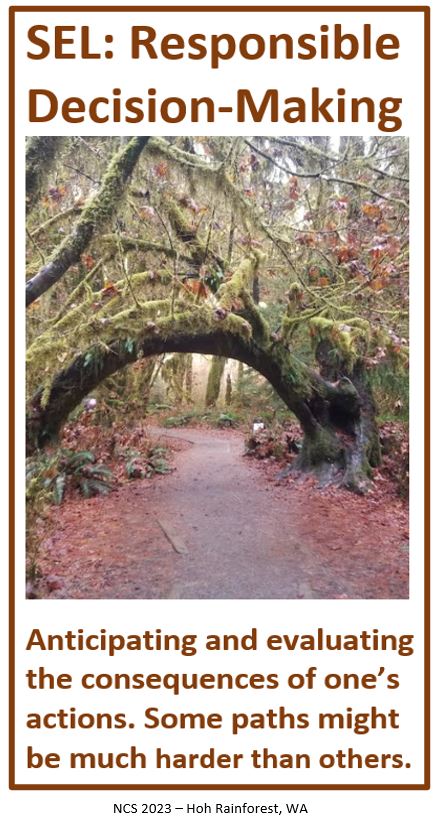
In the beginning of a school year it is important to remember that every student is on their own learning path – with their private history (which can be scary, maybe with harmful elements for learning process, like neglect and abuse causing serious trauma that messes with their learning process) [1]. We all are in our own learning paths with our previous experiences and hopes/plans for the future learning. As educators, we can design learning experiences that guide students on the path of making responsible decisions (for their learning and lives #sel), but we cannot force people to change or follow a given path. This is why using the power of positive regard is so important! We are helping our students to create hopeful futures – and I have found empathy, curiosity and open-mindedness to become my most valuable tools as an educator!
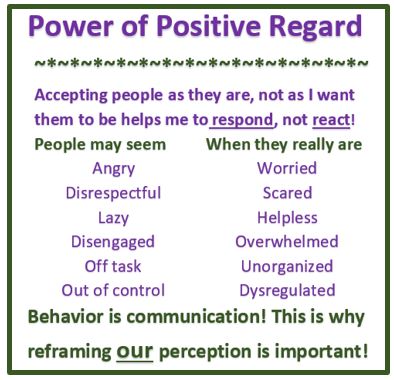
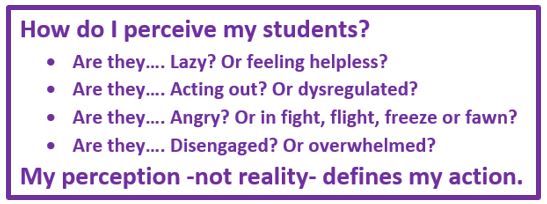
It is not easy to try to see the positive in a disruptive behavior. Reminding myself to perceive students as complex human beings is often the most helpful first step for me. Students are on different paths, they have lives outside of school, and sometimes just reframing our perception can help us to remember that there might be a reason for a student to act differently. Isolating the behavior from the person helps us to accept our students as they are, not as we wanted them to be. And the younger the student, the more they need our help in managing their emotions and stress, which is why we want to actively design and build emotionally safe learning environments [2] to help every student to get onto a hopeful learning path. I know this sounds like a lot of extra work but the payback is incredible: deeper learning, better learning outcomes, less disruptions, students helping each other, and so on. Acknowledging the presence of trauma in all our lives allows us to have more compassion for students and help them to see that the hopeful futures can exist! To design these learning experiences, we need to have empathy, work to find our curiosity again, and then just decidedly stay open-minded.
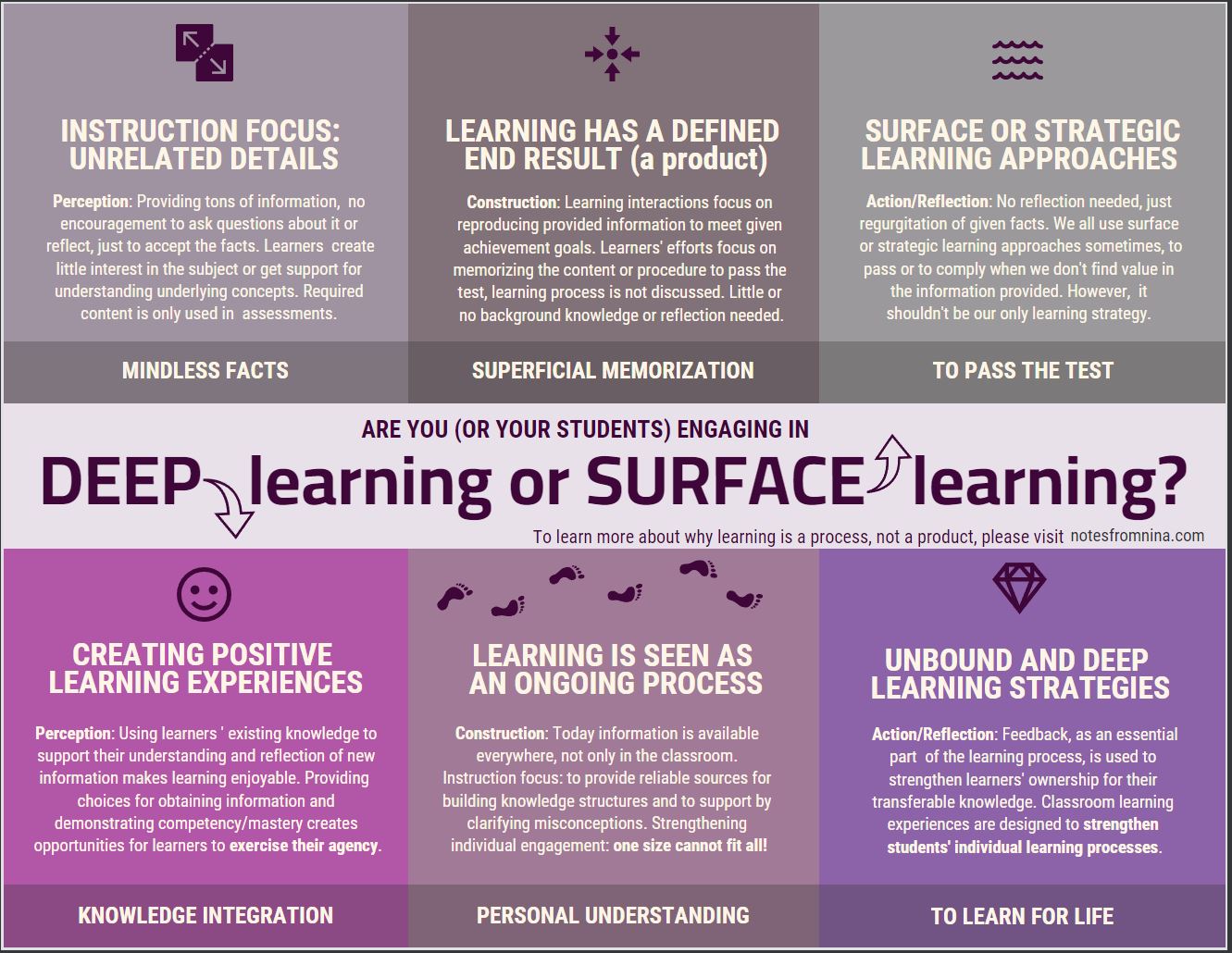
While we are not counselors or mental health professionals, we ARE supporting our students’ personal growth with all our learning design and classroom interactions – and helping students to stay curious is important! We can (and should) actively choose how to teach because our pedagogical choices impact the deep and surface learning strategies our students decide to use. An important role for a teacher is to help students make good choices. Otherwise kids could just learn everything they need from a video feed.
Adverse childhood experiences (ACEs) are often very visible in the classroom, causing many kinds of disruptions. Students may appear disrespectful or angry, disengaged or lazy, but without knowing what is causing their misbehavior, we are more likely to react to the situation than using a pedagogically sound response. The “disrespectful” student may be scared of something and in the fight-flight- freeze-fawn mode; the “angry” student may be worrying about their family or safety. The “disengaged” student may be simply overwhelmed and doesn’t know how to ask for help. And the “lazy” student may have no idea how to get a task started, or homework completed. Which is why they need our help. Lot’s of help. To get on a better path and to make those responsible decisions about their learning and futures.
Designing opportunities for positive childhood experiences (PCEs) are our best tools for creating those hopeful futures [3]. Their report shows that “Children can succeed in school, even with substantial adversity, when they develop executive functioning skills and use the relational supports that are known to promote resilience.” And while I know that the report talks about childhood experiences, during my 10+ years in Higher Ed, mentoring M.Ed. grad students, I have learned that students of all ages react well to the unconditional positive regard. In addition to the trauma from our personal life situations, adult learners often also carry some serious educational trauma, making it harder to be curious and open-minded in a formal learning situation, like continuing education course or while earning a degree, making positive regard and individual support essential pars of our learning design.
What are your ideas for designing learning paths to hopeful futures? Please comment below!
References:
[1] Perry, B. D. (2006). Fear and learning: Trauma-related factors in the adult education process. New Directions for Adult and Continuing Education, 110, 21.
[2] Burstein, D., Yang, C., Johnson, K., Linkenbach, J., & Sege, R. (2021). Transforming practice with hope (healthy outcomes from positive experiences). Maternal and Child Health Journal, 25(7), 1019-1024.
[3] Sege, R., Bethell, C., Linkenbach, J., Jones, J., Klika, B. & Pecora, P.J. (2017). Balancing adverse childhood experiences with HOPE: New insights into the role of positive experience on child and family development. Boston: The Medical Foundation.
Anything you pay attention to in your educational practice is likely to show an increase in your metrics. It truly is as simple as that. The human perception focuses on things we expect. This is why verbalizing your positive expectations will make a difference.
As a teacher you are externalizing your values and beliefs while you teach, i.e. communicate with your students. So, if you expect students to hate learning…well…that is what you will get. Focusing your communication on what you wish to happen creates the expectation for students. I am talking about the subtexts of the classrooms anywhere, on any level of education. And the decisions we make about them, either knowingly or not.
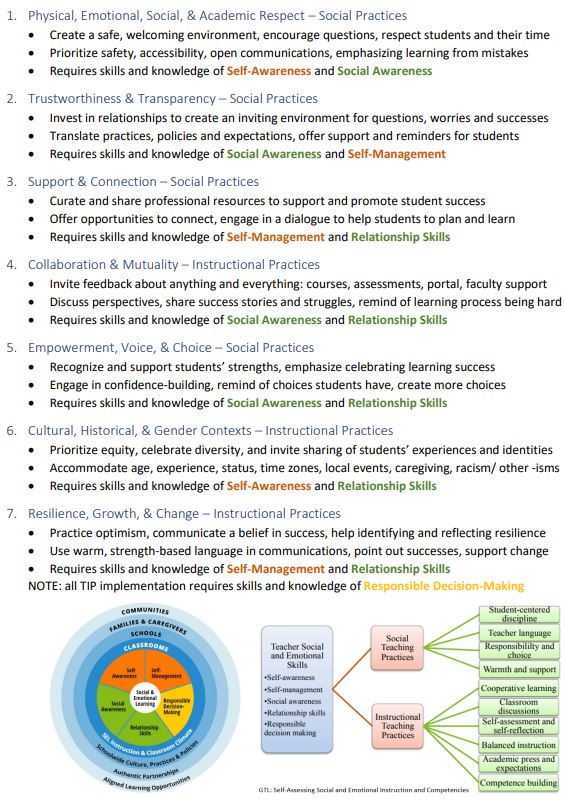
To truly make responsible decisions in education, we need to have a deep understanding of Trauma-Informed Practices, and how to support learners’ self-regulation. (Here is a video and an infographic) Unregulated students are not able to learn. But there is actually more to that. Our instructional practices match with our communication. And even if our words (and expressions) are positive but the undertone strongly negative, students will instinctively be following the latter.
Here is the TIP sheet I created to have a one-page document reminder of both SEL and TIP (Social-Emotional Learning and Trauma-Informed Practices), so that I can have it open on my desktop while working with my students:
Having practices that communicate respect, transparency, support, collaboration, empowerment, safety and resilience will strengthen the positive messages in our educational practice. This will also strengthen students’ understanding about their own learning process – which of course makes giving encouraging and positive feedback even easier.
This is a choice every educator has to make. It starts from stating positive expectations and making sure your instructional practices match with your words.
This blog post was originally published in December 2011. Occasionally I revisit my old posts to see if I still agree with them. 🙂
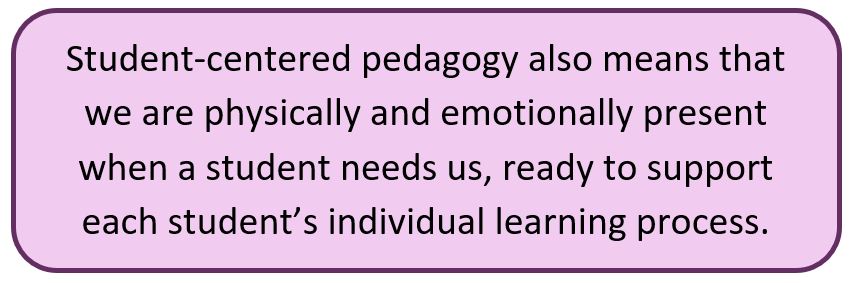
Student-centered and emotionally safe pedagogy is an attitude. It is not a handbook of tips and tricks, to help us survive our days. It is being physically and emotionally present when the student needs us. It is also thinking more about the process than the product. And in these classrooms the focus is in creating, not copying, no matter what the task is – this applies to art as well as note taking!
I think today, in 2022, the learner-centeredness and focusing on supporting students’ emotional safety is more important than ever! But this may require a perspective change for educators and administrators. A big one. Shifting from perceiving students as disobedient, uncontrollable, mean, or acting out, to understanding that these behaviors are indicators of trauma in students’ lives.
We cannot deny the effects of trauma in our classrooms!
Students need our help, so that they can learn how to self-regulate, or to use better ways to get their needs met. SEL is important and necessary in education, but it may not be enough. I think in 2022 we all need to learn how to use Trauma Informed Practices to create emotionally safe learning environments. Emotionally safe classrooms are flexible by their nature and they have rules that are consistent and justified. Ordering other people arbitrarily around is only a way to show your power over them. Being considerate is generally understood as a virtue, and showing the same politeness to children does not go without rewards. Treating students as individual human beings feels like basic courtesy to me.
The central values of safety, co-operation, individuality, and responsibility help students to build a realistic self-image together with the teacher and classmates – and these all are central SEL skills we all need to be successful in the society. These values also create the foundation for an emotionally safe learning environment. Most often these values are expressed in the classrooms and discussed with the students. Ideally the wording of the rules is created in cooperation with students, and confirmed with the signatures of the teacher and students, before posting them on the wall for further reference.
Stress-free atmosphere is the first principle for creating an emotionally safe growing and learning environment. Focusing on learning process instead of the product helps to create the feeling of having enough time, which enables students to focus on their own learning instead of external factors that might disturb their concentration. This also supports learner agency. Knowing that their thoughts and ideas are valued helps students to think and express their thoughts more freely.
More thinking equals more learning.
The one situation when most of us feel threatened or unsafe is while we are receiving feedback. In an emotionally safe classroom feedback becomes a natural part of the learning process, and thus stops being scary. While utilizing students’ daily self-evaluation and teacher’s verbal comments, the feedback system actually becomes a tool for the students to control their own learning. This automatically holds students accountable for their own learning and helps them realize how much they already have learned. Ungrading is a growing movement among teachers!
I mentor students pursuing their M.Ed. degrees In Learning Experience Design and Curriculum & Instruction, and try to follow my own advice. Therefore the most important question I ask every day is: How can I support your learning today?
Learner-centered and emotionally safe pedagogy is an attitude or disposition. It is not a handbook of tips and tricks. It is being physically and emotionally present when a student needs us. It is also about focusing on the learning process instead of the product (worksheet, assessment, test score, etc.). It means engaging in a dialogue, offering help and support, and answering the question every student asks: What’s in it for me?
Personalization is one of the modern approaches in learning and teaching. However, it is important to remember that designing great learning experiences doesn’t require any special apps, programs or gadgets! We want it to based on Learner-centered pedagogy because it has a long history and it has proven to be very effective. At the simplest form learner-centered means that we are are focusing everything around students needs. (Image below: my starburst mirror in the making)
When I was making my starburst mirror few years back, I was thinking that this is how student-centered learning really works: keeping students in the center and carefully building the individualized support around them. This means purposefully designing the instructional process (teaching methods, lesson planning and classroom management) to meet students’ needs, focusing on supporting students’ individual learning process (learning and development and SEL) and using assessment data to support students’ individual learning processes. Please see TPK for more info about pedagogical knwoledge.
Some students need more support than others. We are not clones and should not be treated like ones, so it is important to abandon the outdated factory model, where learning is seen to be a product (of instruction and testing). To me, one the cringiest examples of the product thinking is seeing 28 pieces of identical “artwork” on classroom walls. Yes, students had learned to follow directions and create a copy of something, but the scary truth is that we will never creat the same competency when following somone else’s thinking. For deep learning to happen we must engage in our own thinking – this is what I learned while working for Head Start. Children were amazingly creative and learned so much every day while playing.
A major problem is that we still talk about learning and teaching like they were just one process. But learning and teaching are two different things! They are two different processes that are often put into the same frame of reference (education) and sometimes even happen in the same physical space (classroom) – but it would be foolish for us to imagine that students only learn at school! The “real” learning often happens after studying has been done, and the newly gained knowledge is used in real-life situations and combined with all the existing knowledge and experiences student have. This is what “deep learning” means: reconstructed personal understanding of the topic.
When we perceive learning as an in-built force within our students, the teaching job became instantly easier! Being a facilitator for learning and guiding students to build their own knowledge is a huge step towards supporting learner agency. And it is truly learner-centered!
We want to strive towards the next step in education: schools evolving to places where knowledge is socially constructed and contextually reinvented. We can do this is ANY given classroom by offering choices for students and making their learning more meaningful. But this also presents the need for mutual intentionality and accountability – students coming to school with the intention to learn, teachers with the intention to support students’ individual learning. Not just meeting the standard of the learning objective of the day. Please understand that I am NOT against standards! But meeting them cannot be the ONLY goal of education.
The one thing that sustains my professional practice after a decade in Higher Ed is that I get to talk and email with my students, one at the time, and ask the most important question:
How can I help and support your learning process today?
Learning and being taught are two very different experiences. Engagment in one’s own learning process (aquiring information and elaborating on it) is crucially important for deeper learning to happen. Learning is usually more enjoyable than the experience of being taught. (There is a LOT of infomation why professional learning is so much better than professional development, but let’s not get too deep into that! Suffices to say that teacher agency is crucially important for learner agency. Here is a good link: REL Pacific)
University and college students are (mostly) adults, and we need to be very mindful about how we teach. Just because learning happens in interactions. This is one of the deep truths in education: The content of our message matters, but also the delivery!
The phones in the picture are all mine. I used the pink Nokia flip phone in Finland and Mexico before I moved to the U.S., and then was surprised that I still needed a landline here. My house still doesn’t get much of mobile reception. When communication gets harder (because of tech or any other reasons) we should pause for a moment and consider what our students are receiving. Just because what we say (or think what we are saying) can be very different from what our students are hearing. This is why learning really needs dialogues, the back-and-forth exchanges where we are building mutual understanding. Which obviously takes time. But that time is so extremely well spent!
Adult learners bring such a huge burden of their previous learning experiences to every assessment they are facing. One part of the problem is that often there aren’t real rubrics that would map the scope of the assessment, the other part is that we all interpret the assessment and the rubric using our past educational experiences. This is why coaching (or mentoring) is an important part of adult learning. By engaging in dialogue and highlighting SEL (social-emotional learning) competencies we can support adult learners to enjoy their learning experience and gain the most of it.
Everyone who works in higher education should read the APA guide to College Teaching. It has excellent insight into how students learn and how we can support that learning. The other resource I use every day is the CASEL framework. It helps me to discuss the self awareness and self-management we need as eductors, as well as social awareness, relationship skills and my all-time-favorite: responsible decision making! My other blog is named “Choosing How to Teach” for this very reason – we DO have choices and we can choose to support our students’ learning and SEL. Learning IS a process, not just a product.
How about you? What are your best resources for supporting adult learning and SEL?
Student-centered and emotionally safe pedagogy is a choice, an instructional approach in any level of education. It is not a handbook of tips and tricks, to add diversity and equity into instruction, or help us survive our challenging days in the education profession. It is being intellectually and emotionally present when a student needs us. It is also about choosing the instructional strategies to support every students’ individual learning process and learner agency[1].
I have been on the path of critical pedagogy for a long time. During my own K-12 education, I never imagined I would become a teacher, but as an adult I was intrigued by the ways we construct our understanding. Even before I became a teacher I wondered how individual learning could be better supported – because one size does not fit all. It seemed to me that an intellectually and emotionally safe learning environment was very necessary for supporting the learning process. After that realization there was no turning back – I had to study education science. 🙂
Learning happens in a social context, in interactions, and as educators we can make this experience better for our students. Emotionally safe classrooms are flexible by nature and they have rules that are consistent and justified, and preferably created in cooperation with students. Treating students as unique human beings is essential – which makes is hard or impossible to use behaviorist learning theories, or have strong external regulation for learning process. Later I realized that this also describes the DEI – approach for diversity, equity and inclusion. We want to support students’ self-determination because it increases their intrinsic motivation and ownership of their learning process [2].
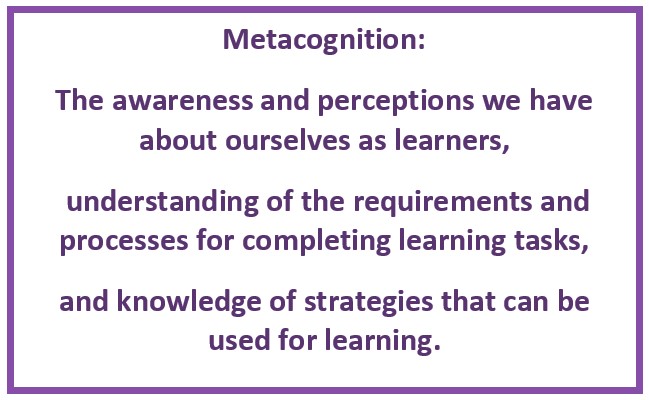
Learning to learn is a lifelong process. It starts in early childhood, which is why preschool can have such a huge effect in future learning. Good quality early childhood pedagogy focuses on supporting holistic child development and making learning a joyful experience children want to repeat. It is important to also teach children how to help themselves to learn. We do this by increasing their metacognition and guiding children to use a variety of deep learning strategies – based on the learning task they are facing [3]. Learning to write one’s own name requires different strategies than learning to ride a bike. In order to choose, we must be aware about choices we have. And as adults we are still discovering new learning strategies for ourselves – if we keep looking for them. It really IS a life-long process.
We all have our subjective experiences and preferences that inform our choices. Sometimes we need to learn to manage ourselves in a different way – fortunately there are plenty of great SEL resources to use. Please check the CASEL framework and resources! I became familiar with social-emotional learning when I was earning my M.Ed. in Finland, and it has been a crucially important part of the learner-centered and emotionally safe pedagogy I have been building in my career and discussing in this blog. Stress-free atmosphere helps to build an emotionally safe growing and learning environment. Knowing that their thoughts and ideas are valued helps students think and express their thoughts more freely. More thinking equals more learning.
The one situation when most of us feel threatened or unsafe is while we are receiving feedback. In an emotionally safe classroom feedback becomes a natural part of the learning process, and thus stops being scary – Growth Mindset can be used in this, if we remember to use the pedagogy of kindness and invest in personhood [4]. Focusing on supporting each individual student on their own learning path does take more time than applying standardized measures. But, it is also more effective. Students’ daily self-evaluation and teacher’s verbal comments can create an awesome tool for students to reflect and control their own learning, but it takes time to have those individual interactions with all students. I would like to see classroom sizes small enough to allow more dialogue, because learning still happens in interactions, regardless of the technology we may be using.
It is important to remember that being kind is different from being nice. While being kind I engage in the important (but hard) dialogue about learning, helping my students to understand their own learning process and how they can either help or hinder their own learning. If I were to be just nice, I could say “Good job!” and move on – but that would not help my students to learn more.
References:
[1] Smith, N.C. (2017). Students’ perceptions of learner agency: A phenomenographic inquiry into the lived learning experiences of high school students. (Doctoral Dissertation). Northeastern Repository
[2] Deci, E. L., & Ryan, R. M. (2000). The” what” and” why” of goal pursuits: Human needs and the self-determination of behavior. Psychological inquiry, 11(4), 227-268.
[4] Denial, C. (2020) A pedagogy of kindness. In. L. Stommel, C. Friend, & S.M. Morris (Eds.), Critical digital pedagogy: A collection. Hybrid Pedagogy Incorporated (pp. 212-218). https://hybridpedagogy.org/critical-digital-pedagogy/
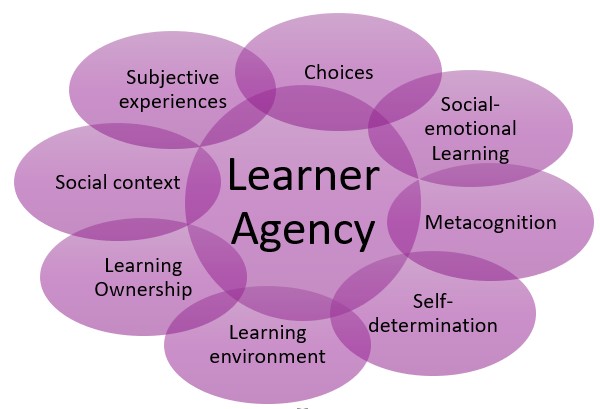
Learner agency (students’ voice and choice in their own learning) has gained wonderfully much interest in education around the world during the past few years.
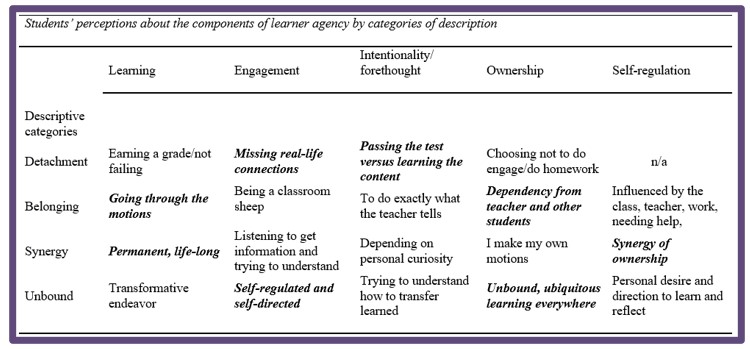
Alas, sometimes I see learner agency being expressed as something students either have or don’t have – yet, agency is truly the capacity to choose our responses to problematic situations [1]. It is not up to us as educators to start scoring learner agency, or dividing students based of whether they have agency or not. And, according to my research, learner agency may sometimes appear negative, especially when students choose to disengage – often to object the structure of instruction.
Students can perceive their learner agency as Detachment, Belonging, Synergy or Unbound.
Detachment can happen more easily when students perceive that their learning has no real-life connections, or when they are just going through the motions to earn a grade. There is very little or no learning going on, and students may engage in surface learning strategies.
The good news is that we CAN support learner agency with our instruction and classroom management and help students to belong, find synergy and become unbound learners. Choosing to teach with respect towards students and support students’ ownership of their own learning is a good start! Social- emotional learning (SEL) provides great tools for supporting learner agency. CASEL framework has identified 5 areas in SEL:
self-awareness
self-management
social awareness
relationship skills
responsible decision making
These are not something new and surprising, teachers throughout the time have focused on supporting these areas in their classrooms. And we know from decades of research how successful students already use all these skills – I am thinking all the research about self-regulation and co-regulation, engagement and participation, executive functions, metacognitive skills, and so forth. All SEL skills are necessary for successful learning, but too often they are not taught throughout formal education. And children arrive to school with different skillsets of SEL, some will need more help than others.
By embedding the SEL skills to our instruction and classroom management we are helping students to better engage in their own, individual learning process. And this is why embedding SEL is so crucially important! They should not be an additional curriculum, but learned within every school subject and project. The classroom applications for embedding SEL are quite self-evident:
Supporting students’ self-awareness means that we address their thoughts, beliefs, emotions and motivations regarding the learning experiences students have.
Providing information is just one part of the teaching-learning exchange
Addressing students’ questions and validating their thoughts immediately deepens the learning experience
Helping students to deal with their emotions during learning process further improves the learning experience – getting new or contradicting information is hard for all of us!
Supporting students’ self-management means that we help students to take initiative and cope with their emotions and thoughts, and we also provide guidance for stressful situations.
We have all had students with advanced self-management skills, and also students who haven’t really been exposed what self-management means. Balancing different student needs is always challenging, and it will always be challenging because we are individuals with different personal histories. Supporting students’ self-regulation is just a part of being an educator!
Some students need more support in taking initiative than others, it may be a part of their personality. Too often I see extroversion being rewarded over introversion – even though one is not a better personality trait than the other!
Supporting students’ social awareness means that we model empathy and compassion, recognize (and verbalize) situational demands and opportunities, and help all students to take perspective
Understanding the perspective of another person is a fundamental skill in the society, and we can choose to teach this with all classroom interactions. Think-pair-share is a great start!
Discussing why some things are harder to learn than others is important, because it relates directly to the mindsets we have. And verbalizing that we all struggle with something builds better communication and learning skills for the future.
Supporting students’ relationship skills means that we emphasize cooperation, communication and proactively teach students to seek help and offer help to others
Engaging in dialogue is important. And dialogue is VERY different from discussion, because in dialogue we are actively trying to understand what the other person is trying to express (not focusing on building our own argument).
Cooperative education is learning-centered, meaning that everything we do is focused on supporting students’ learning process and understanding the big picture – instead of cramming tons of details to be forgotten after the test or engaging in busywork.
Learning happens in interactions – so providing more opportunities for meaningful interactions is important!
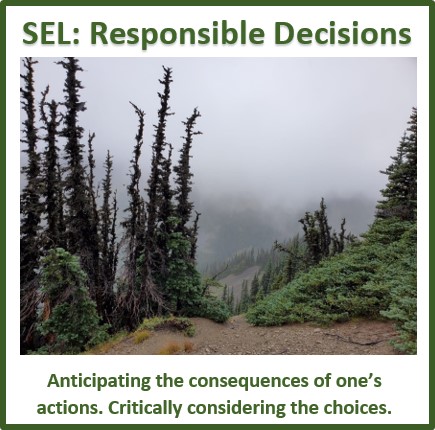
Supporting students’ responsible decision making means that we teach students how to make good decisions, first with smaller things and about personal behaviors and social interactions, but also increasingly more complex decisions.
Only through making choices we can train our own executive functions [2] – EF doesn’t develop if we are always told what we need to do.
Too many (and too big) choices can be detrimental – knowing students’ personal preferences will help us to support them learning to choose.
Adding choices also communicates to our students that we believe they can learn, and that we are there to help, if needed.
All the five SEL elements are organically present in our lives, in our societies. Classroom learning shouldn’t be an exception of this. Choosing to teach with the focus of supporting students’ learning process also helps us empower our students to learn more on their own.
Helping students to learn how to make responsible choices is a crucially important life skill. Let’s not waste our opportunity to support their agency by embedding SEL strategies to our instruction and adding more students’ voice and choice to every learning interaction!
Biesta, G., & Tedder, M. (2007). Agency and learning in the lifecourse: Towards an ecological perspective. Studies in the Education of Adults, 39(2), 132-149.
[2] Patall, E. A., Cooper, H., & Robinson, J. C. (2008). The effects of choice on intrinsic motivation and related outcomes: a meta-analysis of research findings. Psychological bulletin, 134(2), 270.
Smith, N.C. (2017). Students’ perceptions of learner agency: A phenomenographic inquiry into the lived learning experiences of high school students. (Doctoral Dissertation). Northeastern Repository
Passionate about learner agency. Firm believer in the best teacher being the one who makes herself unnecessary by empowering students to become autonomous learners.






 NotesFromNina