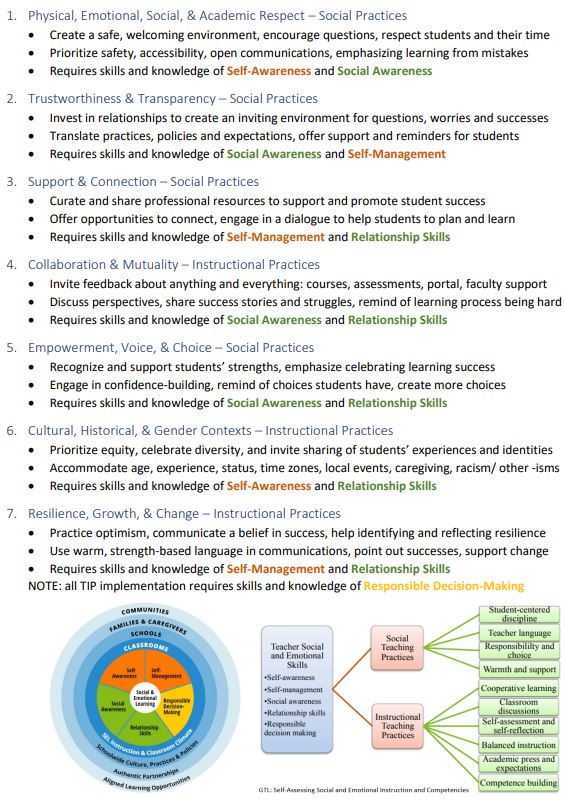
Many educators and education leaders agree that learner-centered education is essential for modern learning. We also acknowledge the importance of Social-Emotional Learning and Trauma-Informed practices and supporting learner agency and resilience. Somehow the traditional top-down models still dominate the educational systems, standards and benchmarks [1].
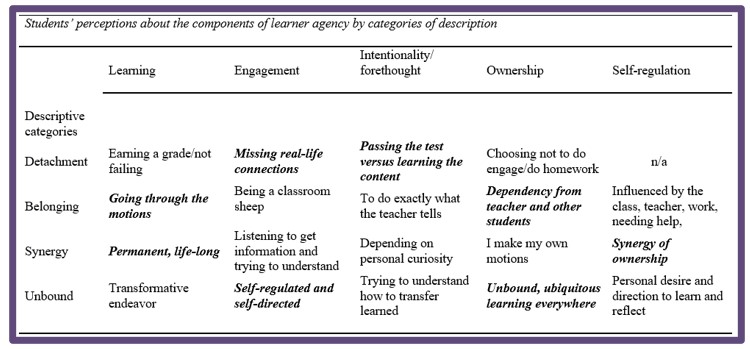
Supporting learner agency is a single step solution for better learning experiences. Human agency is our highest-order emergent function, it is our ability to choose, not a part of Executive Function or willpower to achieve given goals. Agency can be negative, too, like when a student chooses not to complete all homework because they will be okay earning a C. For their future plans this may not be a great decision, yet it IS an example of students exercising their agency, encompassing many parts of learning and learning process. One part of formal education is helping students to become ready for their lives in modern societies – and that includes agency as self-awareness and degree of freedom.

To support students’ agency in positive ways we need to create learner-centered environments on all levels of education. [2]. Hopeful Pedagogy is a great tool for highlighting the power of positive experiences – not only in academics, but also in building shared understanding and working together to solve other problems that arise in social situations like classroom or recess or study groups. We all can create positive experiences for others in many different situations. And we should.
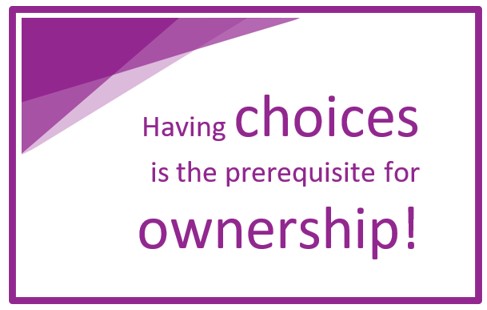
We all have students from different walks of life – socio-economical, historical, linguistic and many more – which is why we need to offer choices to students for content, engagement and assessments to create opportunities for practicing both agency and resilience in emotionally safe learning environment. Supporting learner resilience means understanding the impact of ACEs (Adverse Childhood Experiences) and actively choosing how we perceive our students.
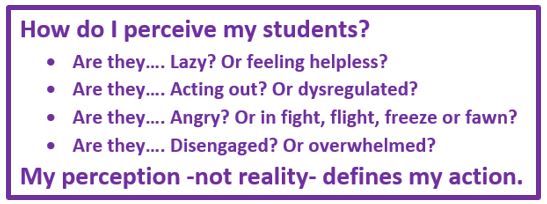
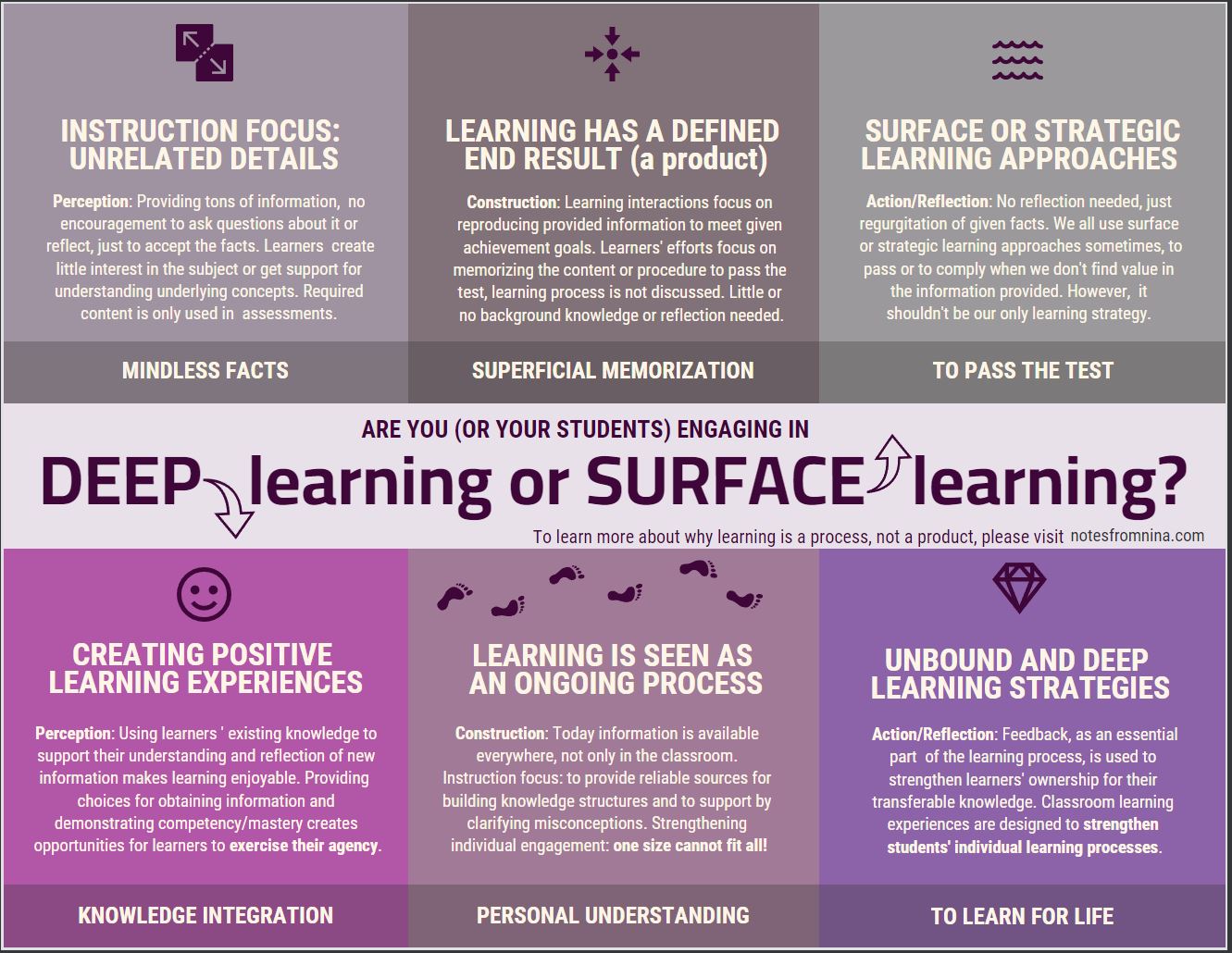
Using Hopeful Pedagogy starts from our perceptions and actively choosing our actions to support Learner Agency for every student. To help students choose to make the choice to learn for their own benefit instead just to pass a given assessment or task. To support students’ hopes and help to embark on a learning path for a better future and support the idea of lifelong learning and having meaningful learning experiences.
Hopeful Pedagogy (or Hopeful Andragogy – my students are earning their M.Ed degrees) is an important part of contemporary education. And the bottom line is: “Educating, regardless of age is about leading others in meaningful and hopeful ways.” [3]
[1] Learner-centered https://psycnet.apa.org/doiLanding?doi=10.1037%2Fspq0000589 SEL: https://casel.org/fundamentals-of-sel/what-is-the-casel-framework/ Trauma-Informed practices: https://www.nctsn.org/ and https://en.wikipedia.org/wiki/Trauma-informed_care
[2] Agency defined on p. 443 in Zelazo, P. D. (2020). Executive Function and Psychopathology: A Neurodevelopmental Perspective. Annual Review of Clinical Psychology, 16.
[3] Prefontaine, I. (2023). Re-imagining Teacher Education as an Andragogy of Hope. an Andragogy of Hope” (2023). International Conference on Hate Studies. 5. https://repository.gonzaga.edu/icohs/2023/seventh/5



 NotesFromNina
